

76-year-old female – Horizontal Mid Patella Fracture, Minimal Displacement
A lovely, active 76-year-old female presented to Access Ortho with a referral from her GP. She had fallen whilst on holiday in Melbourne seven days earlier. After the fall, she was taken by ambulance to the emergency department, where she was placed in a Richards splint (a long leg brace that restricts knee movement). She was prescribed Clexane as prophylaxis for deep vein thrombosis (DVT). It was not how the patient was planning for her holiday to end!
The Melbourne hospital advised her to follow up with a fracture service within two weeks. When the patient returned to Brisbane, she consulted her GP, as she was not sure how to find a clinic that specialised in fracture care. It is important to note that patients can attend Access Ortho without a referral, although we also accept referrals and maintain communication during treatment with referring GPs to ensure coordinated care.
At her Access Ortho appointment, the patient presented with significant knee swelling but was able to perform a straight leg raise, indicating she had preserved quadriceps strength and an intact muscle connection from the thigh to the leg. She was mobilising with difficulty in the splint.
The patient brought copies of her X-rays, which showed a minimally displaced mid-patella fracture with no step. Given the stable nature of the fracture and the fact that the joint surface was still smooth, she was deemed suitable for non-operative management.
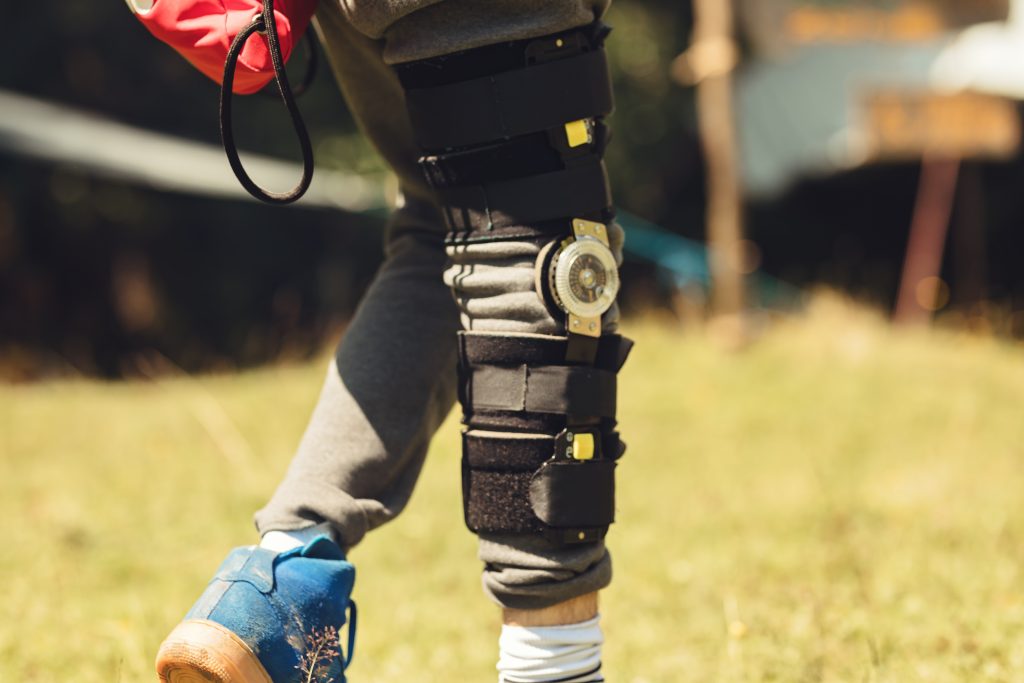
Management of a patella fracture requires a structured plan with gradual introduction of knee movement. For the first two weeks, the patient was placed in a ROM (range of motion) brace locked at 10 degrees of flexion, allowing no knee movement. The patient was advised on the importance of continuing to take Clexane to reduce DVT risk, as immobility increases the likelihood of clot formation. A clot that moves to the lungs can cause a pulmonary embolism (PE), which is potentially fatal. She was also advised not to drive due to the knee brace.
Two-Week Review:
The patient returned with updated X-rays at her two-week review with the orthopaedic surgeon. Healing was progressing well, although she was advised that complete healing typically takes six weeks. She reported difficulties sleeping and sitting due to the brace. She also noted some calf pain, which can be a warning sign for DVT. The orthopaedic doctor further assessed and noted some swelling in the calf and a slight increase in warmth. An ultrasound was arranged to determine if there was a DVT in the patient’s calf. The ultrasound results came back with no concern. The patient was advised to watch for symptoms such as redness, swelling, and warmth in the calf, as these can be signs of a DVT.
The X-ray showed the fracture was healing well, so the ROM brace was adjusted to allow 10–30 degrees of flexion. The patient was happy with this increase in range of movement as she hoped it would improve her ability to sleep.
Six-Week Review:
Four weeks later, the patient returned with further updated X-rays. Pleasingly, these demonstrated excellent healing. She remained uncomfortable while sleeping and was eager to return to activity. The brace was adjusted to allow 0–60 degrees of flexion for two weeks, progressing to 0–90 degrees for another two weeks. She was now permitted to remove the brace for sleep, which was hoped to improve her sleep. She was also encouraged to return to gentle activities such as light swimming and upper body weights.
The patient had some stiffness in the knee, which is to be expected after a period of immobilisation. She was referred to physiotherapy, which would start in two weeks.
Final Review:
At the patient’s final visit to Access Ortho, she was keen to demonstrate that she was confidently walking without the brace. She was attending physiotherapy and enjoying the exercises they had prescribed. She had regained good movement and strength. The patient had commenced aqua aerobics, which she found to be pain-free and enjoyable and reported she was one of the best in her class! Her sleep had returned to normal, and she was satisfied with her recovery.
The patient was discharged, and the admin staff were pleased she had recovered. They were sad to see her go, as she was so friendly and a charming patient to care for. We wish her all the best and hope her next trip ends without a trip to the ED!
Important Points:
Patella fractures require specialist orthopaedic management, as the type and severity can vary significantly. The medical staff at Access Ortho were pleased to assist this patient in returning to her pre-injury level of function while minimising the risks associated with immobilisation and fracture healing.