

Complete Guide to PCL Injuries
What is a PCL Tear/Sprain/Strain?
A PCL (posterior cruciate ligament) tear, sprain, or strain is an injury to one of the four key ligaments that stabilise the knee joint. The PCL connects the femur (thighbone) to the tibia (shinbone) and is located at the back of the knee. It prevents the shinbone from moving too far backwards relative to the thighbone.
Often referred to as the “forgotten ligament,” the PCL is less commonly injured than its more well-known counterpart, the ACL (anterior cruciate ligament). However, when the PCL is overstretched, partially torn, or completely ruptured, it can cause varying levels of knee pain, instability, and reduced function.
What are the Types of PCL Injuries?
PCL Injuries Are Classified by Severity:
- Grade 1 (Mild):
The PCL is overstretched but remains intact. This injury may cause mild discomfort or swelling, but knee stability is generally preserved. Athletes may still be able to walk or participate in light activities with minimal limitations.
- Grade 2 (Moderate):
A partial tear of the PCL results in some laxity or looseness in the knee. Patients may notice increased difficulty with movements that involve deceleration or going downhill. Swelling and tenderness are usually present, and the knee may feel slightly unstable during activity.
- Grade 3 (Severe):
The PCL is completely torn, leading to significant instability, especially when walking downhill or descending stairs. There is often noticeable swelling, pain, and a feeling that the knee may “give way.” Typically, these injuries require more intensive treatment and rehabilitation.
- Grade 4 (Complex Injury):
Involves a complete PCL tear in combination with damage to other knee structures such as the ACL, MCL, LCL, or meniscus. These complex injuries often result from high-impact trauma (e.g. car accidents or contact sports) and typically require surgical intervention and a longer recovery period.
How Common Are PCL Injuries?
PCL injuries account for around 3–20% of all knee ligament injuries and are less common, but often underdiagnosed compared to ACL injuries. They frequently occur in young, active individuals, especially males involved in contact or high-speed sports such as rugby, soccer, skiing, or motorcycling.
Injuries often result from a direct blow to the front of the shin with the knee bent, commonly seen in sports collisions or car accidents (“dashboard injuries”). Isolated PCL tears are rare, and more commonly, PCL injuries occur alongside damage to other structures, such as the ACL, meniscus, or collateral ligaments, particularly in high-energy trauma.
Because symptoms can be subtle, especially in low-grade or isolated tears, PCL injuries are sometimes mistaken for simple knee sprains. Accurate diagnosis often requires MRI and specialist assessment.
Access Ortho are specialists in orthopaedics, Contact us today for a rapid appointment if you have an acute knee injury.
Symptoms and Causes
Symptoms of a PCL Tear
The symptoms of a PCL (posterior cruciate ligament) tear will change depending on how severe the injury is and whether other structures in the knee are also involved. Common signs include:
- Pain at the back of the knee
Discomfort or aching deep within or behind the knee, especially when bending or squatting.
- Swelling
Often mild to moderate and may develop within the first few hours after injury.
- Knee instability or looseness
A feeling that the knee is “giving way,” particularly when walking downhill or descending stairs.
- Difficulty walking or bearing weight
Some people may limp or feel unsteady, especially with more severe tears.
- Stiffness or reduced range of motion
Trouble fully bending or straightening the knee due to swelling or pain.
- Bruising around the knee
It may appear, especially with more significant trauma.
- Posterior sag sign (not always noticed by the patient)
In clinical exams, the shinbone may appear to drop back when the knee is bent, indicating a torn PCL.

What Causes PCL Tears/Sprains/Strains?
Common Causes of PCL Injuries
- Dashboard injuries in car accidents:
When the shinbone (tibia) hits the dashboard during a collision while the knee is bent, it forces the bone backwards, tearing the PCL.
- Direct blow/force to the front of a bent knee:
This can happen in contact sports or falls, where something strikes the front of the knee while it’s flexed, pushing the shinbone backwards.
- Falling onto a bent knee with toes pointed:
Landing hard on a flexed knee, especially if the foot is pointed or not flat, can create enough force to strain or tear the PCL.
- Hyperextension of the knee:
If the knee is forced to straighten beyond its normal limit (often during jumping or landing awkwardly), the PCL can be overstretched or torn.
- Hyperflexion of the knee:
Bending the knee too far back on itself, such as during a fall or awkward landing, can put too much stress on the PCL.
- Sports injuries (football, rugby, soccer):
Sudden changes in direction, collisions, or falling awkwardly during high-speed sports can lead to PCL damage, often alongside other ligament injuries.
Risk Factors for PCL Injuries
- Participation in high-impact or collision sports:
Sports like football, rugby, soccer, basketball, and skiing involve sudden stops, changes in direction, or direct contact, increasing the risk of knee trauma, including PCL injuries.
- Motor vehicle accidents:
A common cause of PCL injury, especially “dashboard injuries,” where the shin strikes the dashboard during a crash, forcing the tibia backward.
- Previous knee injuries:
A history of knee ligament damage, especially to the ACL or meniscus, may weaken the joint and increase susceptibility to PCL tears.
- Occupations involving kneeling or crawling:
Jobs that place repeated stress on bent knees, such as plumbing, flooring, or certain trades, can gradually strain the PCL over time.
- Poor protective equipment during high-risk activities:
Lack of adequate padding, braces, or safety gear in sports or manual labour can leave the knee more vulnerable to injury.
- Inadequate conditioning or training:
Weakness in the muscles that support the knee (for example, the quadriceps and hamstrings), poor balance, and limited flexibility may lead to an increased risk of injury during physical activity.
- Improper technique in physical activity:
Using incorrect form while jumping, landing, or lifting can put unnecessary strain on the knee.
How Can I Prevent PCL Injuries?
- Use proper protective equipment during high-risk activities:
Wearing well-fitted knee pads, braces, or protective gear can reduce the risk of direct impact injuries in sports and manual work.
- Strengthen quadriceps and hamstring muscles:
Strong thigh muscles help stabilise the knee joint and reduce the strain on ligaments like the PCL, especially during sudden movements or impacts.
- Include core stability training:
A strong core improves overall body control, balance, and posture, reducing awkward movements that could lead to knee injury.
- Practice proper technique in sports activities:
Learning correct techniques for jumping, landing, cutting, and pivoting helps avoid undue stress on the knee ligaments.
- Perform appropriate warm-up routines:
Warming up before exercise improves flexibility, increases blood flow to muscles, and prepares the joints for movement, lowering the risk of injury.
- Follow vehicle safety measures:
Always wear a seatbelt, sit with knees slightly bent rather than locked, and ensure airbags are functioning; these are especially important to prevent dashboard-related PCL injuries in car accidents.
- Engage in neuromuscular training programs:
These specialised training routines focus on improving strength, balance, coordination, and joint control, proven to reduce the risk of ACL and PCL injuries in athletes.
What Are the Complications of PCL Injuries?
It is important that your medical practitioner is aware of the complications that can occur following a PCL injury. Access Ortho are specialists in caring for orthopaedic injuries. This knowledge ensures a rapid, accurate diagnosis and treatment plan, minimising the chance of complications. The following is a list of common complications of PCL injuries.
- Chronic knee instability:
A torn or weakened PCL may lead to ongoing feelings of looseness or the knee “giving way,” especially during activities involving pivoting, downhill walking, or squatting.
- Altered knee mechanics:
When the PCL is damaged, it can change how the knee moves and absorbs force, placing extra stress on other structures and increasing the risk of further injury.
- Accelerated knee cartilage degeneration:
After a PCL injury, abnormal joint mechanics can wear down the protective cartilage (especially behind the kneecap), leading to pain, stiffness, and long-term damage.
- Development of osteoarthritis:
Over time, the abnormal load distribution in the knee joint, particularly in the medial or patellofemoral compartments, can contribute to early-onset osteoarthritis.
- Persistent pain and swelling:
Some individuals may continue to experience discomfort, inflammation, or swelling, especially after activity, even with conservative management.
- Functional limitations in activities and sports:
Ongoing instability or pain can make returning to high-level physical activity difficult, affecting work, sport, and everyday tasks like stair climbing or kneeling.
- Associated injuries to other knee structures:
PCL injuries, especially from high-energy trauma, often occur alongside damage to the ACL, MCL, LCL, or menisci, complicating treatment and prolonging recovery.
If you have had a recent knee injury, contact Access Ortho for a rapid appointment.
Diagnosis and Tests
How Are PCL Tears, Sprains, or Strains Diagnosed?
Reaching a diagnosis involves a detailed medical history and thorough clinical examination. Unlike ACL injuries, PCL tears may present with more subtle symptoms, especially in low-grade or isolated cases. As a result, these injuries are often underdiagnosed unless carefully assessed. Clinicians will consider the mechanism of injury and symptoms, such as posterior knee pain or instability, and perform specific physical tests to evaluate the integrity of the ligament.
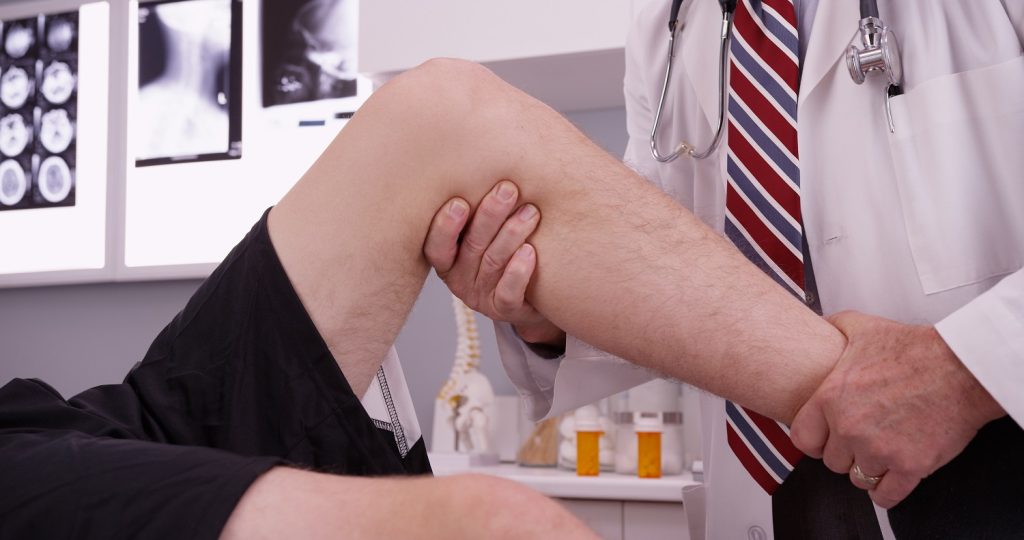
Which Tests Do Providers Use to Diagnose PCL Injuries?
- Posterior Drawer Test:
The key clinical test for assessing PCL integrity. With the knee at 90 degrees, the examiner pushes the tibia backward. Excessive backward movement indicates PCL laxity or rupture.
- Posterior Sag Sign (including Quadriceps Active Test):
In this test, the examiner observes for a noticeable “sag” of the tibia when the leg is lifted with the knee bent. In the quadriceps active variant, the patient contracts the quadriceps while the examiner resists tibial movement: forward motion may suggest a PCL tear.
- Reverse Pivot Shift Test:
A specialised manoeuvre used to detect posterolateral rotational instability, which may be present in complex or multi-ligament injuries involving the PCL.
- MRI (Magnetic Resonance Imaging):
The gold standard for confirming PCL injury. MRI provides a view of soft tissues, allowing assessment of the ligament itself and any associated injuries to the menisci, cartilage, or other ligaments.
- Stress Radiography:
Special X-rays taken under applied force can demonstrate if there is increased posterior translation of the tibia compared to the uninjured knee, helping quantify instability.
- KT-1000 or KT-2000 Arthrometer Measurements:
These handheld devices measure the degree of anterior and posterior tibial movement under load. While more commonly used for ACL assessment, they can assist in evaluating side-to-side differences in PCL-injured knees. They are typically used for research rather than as a patient diagnostic tool.
- Standard X-rays:
Although X-rays don’t show ligaments, they are helpful in ruling out PCL avulsion fractures, where a piece of bone is pulled off at the ligament’s attachment site; more common in younger patients or traumatic injuries.
The medical team at Access Ortho will arrange for tests that will assist with your diagnosis.
Specific Considerations for PCL Injuries
Isolated vs. Multi-ligament Injuries
PCL injuries can occur alone (isolated) or alongside damage to other knee structures such as the ACL, MCL, LCL, or meniscus (multi-ligament injuries).
- Isolated PCL injuries are often managed conservatively with bracing, physiotherapy, and activity modification, especially if stability is preserved.
- Multi-ligament injuries, commonly seen in high-energy trauma, typically require a more aggressive approach, including early surgical reconstruction and longer rehabilitation, due to the increased risk of joint instability and long-term functional impairment.
Acute vs. Chronic Injuries
The timing of presentation plays a key role in guiding treatment decisions:
- Acute PCL injuries (within 3–6 weeks of injury) are typically easier to manage, with better tissue healing potential and more responsive outcomes to conservative or surgical intervention.
- Chronic PCL deficiency can develop if an acute injury is missed or untreated. These cases may present with vague symptoms such as discomfort, instability during activity (particularly downhill), and gradual degeneration of joint surfaces. Chronic injuries may also lead to compensatory changes in gait and joint mechanics, requiring more complex rehabilitation or reconstruction.
Avulsion Fractures vs. Mid-substance Tears
PCL injuries are further classified based on the location and pattern of the tear:
- Avulsion fractures occur when the ligament is torn off the bone along with a small piece of bone, usually at the tibial insertion. These injuries, more common in younger individuals or trauma cases, are often treated surgically, especially if the bone fragment is significantly displaced.
- Mid-substance tears involve a rupture within the central portion of the ligament. Management depends on the severity and degree of instability; partial tears may heal with conservative treatment, while complete ruptures may require reconstruction.
The team at Access Ortho will discuss your injury and any specific considerations that need to be managed.
Management and Treatment
How Are PCL Tears, Sprains, or Strains Treated?
Treatment depends on the severity (grade) of the injury, whether other knee structures are involved, and individual patient factors such as activity level, age, and goals.
- Grade 1 and 2 injuries (mild to moderate) are usually managed non-surgically.
- Grade 3 and 4 injuries, or those involving multiple ligaments, may require surgical intervention, particularly in athletic or high-demand patients.
Non-Surgical Management
- RICE protocol (Rest, Ice, Compression, Elevation):
Used in the initial phase to reduce pain and swelling. Rest and joint protection are crucial in the first few days post-injury.
- Bracing in extension:
A hinged knee brace may be used to limit posterior tibial translation and protect the ligament while it heals. Bracing is often used for several weeks during early recovery.
- Progressive physiotherapy:
A structured rehab program focuses on restoring range of motion, improving proprioception, and gradually reintroducing functional movements.
- Quadriceps strengthening:
Emphasis is placed on building quadriceps strength to help stabilise the knee and compensate for any remaining PCL laxity. Hamstring loading is typically minimised in early rehab.
- Activity modification:
High-risk movements such as running downhill, deep squatting, or pivoting sports may need to be avoided or modified during recovery.
- Anti-inflammatory medications:
NSAIDs (e.g. ibuprofen) may be used short-term to manage pain and swelling. Long-term use is generally avoided to allow natural healing.
Surgical Treatment
- PCL reconstruction:
Commonly recommended for grade 3–4 injuries, multi-ligament injuries, or active individuals who fail conservative care. The torn ligament is replaced using a graft.
- Surgical repair for avulsion fractures:
When the PCL is torn off the bone along with a fragment (especially in tibial avulsions), this may be repaired directly using screws or anchors to reattach the fragment.
- Graft options (autograft or allograft):
Surgeons may use tissue from the patient (autograft, such as the hamstring or quadriceps tendon) or a donor (allograft). Graft choice depends on patient needs and surgeon preference.
- Single-bundle vs. double-bundle techniques:
Surgical technique may involve reconstructing one (single-bundle) or both (double-bundle) components of the PCL to restore more natural knee biomechanics. Double-bundle may offer improved rotational control but is more technically demanding.
- Repair of associated injuries:
In multi-ligament cases, concurrent repair or reconstruction of the ACL, collateral ligaments, or menisci may be necessary for full knee stability and function.
Outlook / Prognosis
What Can I Expect if I Have a PCL Injury?
The overall prognosis for PCL injuries is generally favourable, especially when the injury is isolated and treated early with an appropriate rehabilitation program. Many individuals, particularly those with Grade 1 or 2 injuries, recover well with non-surgical treatment and can return to normal activities.
However, outcomes will alter depending on factors such as:
- Severity and location of the tear (e.g., mid-substance vs. avulsion)
- Presence of associated injuries (e.g., ACL, meniscus, or collateral ligaments)
- Timing of diagnosis and treatment
- Patient activity level, age, and rehabilitation compliance
Chronic or untreated PCL injuries may lead to persistent instability, altered knee mechanics, and a higher risk of long-term complications such as early-onset osteoarthritis, particularly in the medial and patellofemoral compartments.
What Is the Recovery Time from a PCL Injury?
- Grade 1–2 Injuries (Non-Surgical):
- Initial recovery: 4–6 weeks, focusing on pain management, bracing, and early rehabilitation
- Return to full function and sport: Usually within 3–6 months, depending on individual progress and sport-specific demands
- Outcomes are often excellent with guided physiotherapy and muscle strengthening
- Grade 3–4 Injuries (Surgical):
- Full recovery time: Typically 9–12 months, with gradual progression from protected weight-bearing to functional training
- Return to high-impact sports may take longer and is highly dependent on achieving neuromuscular control, strength, and confidence.
- Rehab after PCL reconstruction tends to be slower and more cautious compared to ACL surgery, due to the risk of posterior sag and graft strain.
In both surgical and non-surgical cases, patient motivation, physiotherapy adherence, and individual healing response significantly influence the timeline and success of recovery.
The orthopaedic team will discuss your expected recovery timeframe.
When Should I See a Specialist?
If you suspect a PCL injury or have ongoing knee symptoms, it’s important to seek specialist assessment, especially if you’re experiencing any of the following:
- Knee pain following trauma:
Any fall, blow to the knee, or twisting injury, particularly if the knee was bent, should be assessed, as it may indicate a ligament tear or associated injury.
- Swelling in the back of the knee:
Swelling or a feeling of fullness behind the knee may signal a PCL injury, especially if it appears within the first few hours after the injury.
- Difficulty bearing weight:
If walking feels unstable or painful, especially with weight shifted backward, it may suggest a ligament injury affecting the knee’s support system.
- Instability when walking down stairs or slopes:
A classic symptom of PCL injury is a feeling of the knee “giving way” or instability during downhill movements or stair descent.
- Pain when kneeling:
Pain or discomfort when kneeling, crouching, or squatting may indicate posterior knee involvement and should be evaluated.
- Persistent pain or swelling after a knee injury:
If symptoms don’t improve within a few days or worsen, it’s best to have your knee assessed by a specialist to rule out significant injury.
What Is a Fracture Clinic?
A fracture clinic is a specialised orthopaedic service that provides diagnosis, treatment, and management for a wide range of musculoskeletal injuries, including PCL tears, ligament sprains, dislocations, and fractures. Despite the name, fracture clinics don’t just treat broken bones—they are equipped to handle all acute joint, tendon, and soft tissue injuries. Access Ortho is a private fracture clinic.
At Access Ortho, we offer:
- Rapid appointments with orthopaedic specialists
- No referral is needed—you can come directly to us
- Affordable care – the cost of care is typically cheaper than attending a private ED or Urgent care centre and will be cheaper than seeing your GP and then a private orthopaedic surgeon
- Referral for imaging, including X-ray and MRI
- Personalised care plans, including non-surgical and surgical treatment options
- Physiotherapy referral for seamless rehabilitation
If you’ve sustained a knee injury or are dealing with unresolved acute knee pain, visiting a dedicated service like Access Ortho ensures prompt diagnosis and expert care, helping you recover faster and avoid long-term complications.
Frequently Asked Questions About PCL Injuries
Why is a PCL injury less common than an ACL injury?
The PCL is stronger than the ACL and is located at the back of the knee, making it less exposed to the twisting forces that commonly injure the ACL.
Can a PCL heal on its own without surgery?
Yes. Grade 1 and 2 injuries often heal with non-surgical treatment, including bracing, rest, and physiotherapy. More severe tears may require surgery, especially in active individuals.
How can I tell if I’ve injured my PCL?
Common signs include pain at the back of the knee, swelling, instability when walking downhill or descending stairs, and difficulty bearing weight after trauma. To confirm a diagnosis, you will require an assessment by a medical practitioner skilled in the diagnosis of knee ligament injuries.
Is surgery always necessary for a PCL tear?
No. Many isolated PCL injuries can be managed non-surgically. Surgery is typically reserved for Grade 3–4 injuries, multi-ligament injuries, or patients with ongoing instability.
What’s the difference between ACL and PCL tears?
The ACL prevents the shinbone from moving too far forward, while the PCL prevents it from moving too far backward. ACL injuries are more common and often caused by twisting; PCL injuries typically involve a direct blow to a bent knee.
How successful is PCL reconstruction surgery?
PCL reconstruction has good outcomes for the right indications, especially in athletic or high-demand patients. Success depends on injury severity, rehab compliance, and associated injuries.
Will I need a brace after a PCL injury?
Yes. Most non-surgical treatments include bracing in knee extension for several weeks to allow healing and reduce posterior tibial translation.
Can I continue playing sports with a PCL tear?
Low-grade injuries may allow a return to sport once strength and stability are restored. High-grade tears or combined injuries may limit sports participation without surgery.
How long will I be off work after PCL surgery?
Recovery varies. For desk-based jobs, return may be possible in 2–4 weeks. Physically demanding work, depending on recovery progress, may require 3–6 months.
Does a PCL injury always cause knee instability?
Not always. Some people with partial tears may feel stable, while others with complete tears may experience significant instability, especially during downhill or twisting movements.
What exercises are best for PCL rehabilitation?
Focus on quadriceps strengthening, core stability, and balance training. Hamstring loading is usually avoided early to prevent stressing the healing ligament.
Can physiotherapy alone heal a PCL tear?
Yes. Many partial or isolated PCL tears respond well to structured physiotherapy. Your doctor will guide you on whether non-surgical management is appropriate.
Will I develop arthritis after a PCL injury?
There is an increased risk, particularly with untreated or chronic instability. Early treatment and strengthening can help minimise this risk.
How does a PCL tear affect daily activities?
You may notice discomfort or instability during tasks like going downstairs, squatting, or kneeling. Most people recover well with appropriate treatment.
What is the recovery process like after PCL reconstruction?
Recovery is gradual and often slower than ACL rehab. It includes bracing, restricted movement early on, and months of progressive physiotherapy. Most patients return to full activity within 9–12 months.