
Complete Guide to MCL Injuries
What is an MCL Tear/Sprain/Strain?
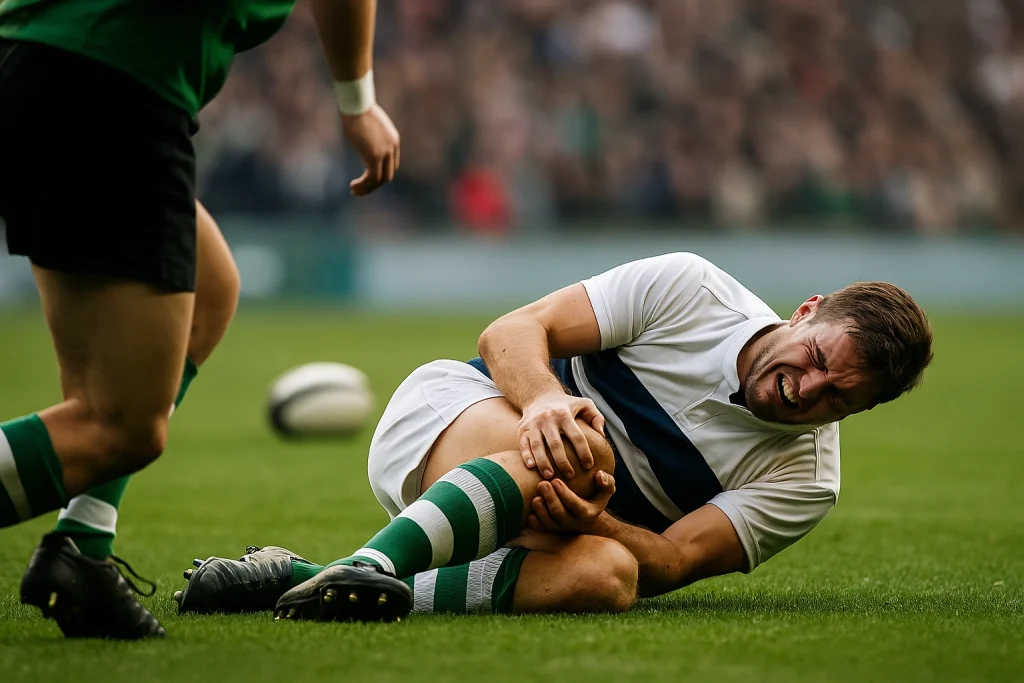
A Medial Collateral Ligament (MCL) injury involves damage to the ligament located on the inner side of the knee. The MCL plays a key role in stabilising the joint and resisting inward (valgus) forces. The MCL connects the thighbone (femur) to the shinbone (tibia) and is injured during activities involving sudden direction changes, twisting, or direct impact. A tear, sprain or strain occurs when the tendon is overstretched.
What are the Types of MCL Injuries?
MCL injuries are graded by severity:
- Grade 1 (Mild):
- The ligament is overstretched with tiny tears but remains mostly intact. Pain is mild, and the knee remains stable.
- Grade 2 (Moderate):
- A partial tear causes noticeable pain, swelling, and some looseness in the knee. Activities like pivoting may feel unstable.
- Grade 3 (Severe):
- A complete tear of the MCL leads to significant instability. The knee may feel like it’s “giving way,” and swelling and pain are more pronounced.
In some cases, the injury may involve more than just the MCL and include other ligaments or the meniscus.
The orthopaedic team at Access Ortho are specialists in diagnosing and treating ligament injuries. If you have concerns following a knee injury, contact Access Ortho for a rapid appointment.
How Common are MCL Injuries?
MCL injuries account for roughly 40% of all knee ligament injuries, making them one of the most frequent knee injuries seen in orthopaedic clinics. They are particularly common in:
- Young athletes, especially those playing contact sports like rugby, football, and soccer.
- Skiers, due to twisting falls.
- Active adults, particularly during rapid directional changes.
While anyone can injure their MCL, those aged between 15 and 45 years tend to be most affected, especially males, due to their higher participation in sports.
Symptoms and Causes
Symptoms of an MCL Tear
Symptoms vary depending on the exact injury, but common signs of an MCL tear include:
- Pain along the inner side of the knee
- Usually felt immediately after injury, it will vary depending on the grade of the tear.
- Swelling and bruising
- It often develops within the first few hours, localised to the inside of the knee.
- Instability or a feeling of the knee “giving way
- It is more common with moderate to severe tears (Grade 2 or 3), especially when turning or pivoting.
- Stiffness or reduced range of motion
- The knee may feel tight or difficult to bend or straighten fully.
- Tenderness to touch
- Pressing on the inner knee typically causes discomfort.
- A popping sensation at the time of injury
- Occasionally reported, especially with higher-grade tears or combined injuries.
- Difficulty bearing weight
- Some people may limp or be unable to put full weight on the affected leg, particularly early on.
What Causes MCL Tears/Sprains/Strains?
- Direct blow to the outside of the knee: Common in tackles or falls, forcing the knee inward.
- Twisting injury: Often happens when the foot is planted and the upper body rotates.
- A sudden change of direction: Quick pivots or cuts can overload the ligament.
- Awkward landings: Landing from a jump with the knee turned inward increases MCL stress.
- Contact sports: Rugby, soccer, and AFL have a high risk of side impacts.
- Skiing accidents: Skis can catch and twist the knee awkwardly.

What are MCL Injury Risk Factors?
Participation in contact sports: Higher chance of impact or awkward movement.
- Previous knee injuries: Weakened structures are more vulnerable.
- Poor conditioning: Weak hip, core, or leg muscles reduce knee control.
- Abnormal knee mechanics: Knock-knees or flat feet can increase stress on the MCL.
- Inadequate recovery: Returning to sport too early raises re-injury risk.
- Improper footwear or surfaces: Slippery or uneven grounds heighten the risk.
What are the Complications of MCL Injuries?
While many MCL injuries heal well with appropriate treatment, complications can arise, particularly if the injury is not properly diagnosed or rehabilitated. These may include:
- Ongoing knee instability
- Without adequate healing or rehabilitation, the knee may continue to feel unstable during activities, especially those involving side-to-side movement or pivoting.
- Recurrent MCL sprains
- Returning to sports or high-impact activities too soon can lead to repeat injuries, further weakening the ligament and prolonging recovery.
- Combined injuries to other knee structures
- MCL injuries may occur alongside tears to the ACL, medial meniscus, or cartilage (commonly referred to as the “unhappy triad”), which can complicate management and lengthen recovery time.
- Post-traumatic arthritis
- Though less common than with other ligament injuries, long-term joint damage or instability from repeated trauma may increase the risk of developing arthritis in the knee.
- Reduced sports performance
- Lingering instability, muscle weakness, or lack of confidence in the knee can affect agility, speed, and overall athletic performance.
- Persistent pain and stiffness
- Pain may continue if the ligament does not fully heal or if underlying biomechanical issues are not addressed, leading to long-term discomfort or limited motion.
The orthopaedic medical team at Access Ortho will help guide you in your recovery to minimise the risk of complications. Early diagnosis also assists with preventing complications.
Diagnosis and Tests
How are MCL Tears/Sprains/Strains Diagnosed?
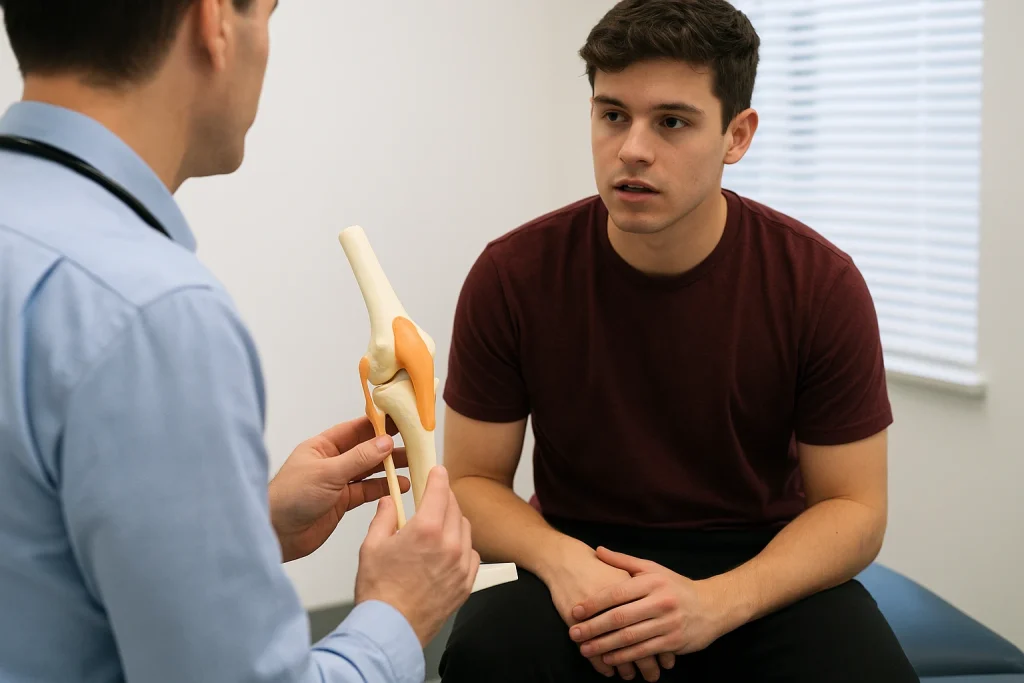
An assessment will begin with a history and physical examination. Your medical provider will ask how the injury occurred, assess the knee for pain and swelling, and check stability using specific ligament tests.
Which Tests Do Providers Use to Diagnose MCL Injuries?
Diagnosing an MCL injury involves a combination of physical examination and imaging tests. These help determine the severity of the injury and whether other structures in the knee are involved:
- Valgus stress test
- This is the primary clinical test for assessing the MCL. The doctor applies pressure to the outside of the slightly bent knee to see if the joint opens on the inner (medial) side. Increased looseness compared to the uninjured knee may indicate a tear.
- Anteromedial rotatory instability test
- This test is used when there is suspicion of damage beyond just the MCL—such as to the ACL or the meniscus. It helps assess combined injuries by checking the knee’s stability in multiple directions.
- MRI (Magnetic Resonance Imaging)
- MRI creates detailed images of soft tissues, allowing clinicians to confirm the location and extent of the MCL tear and check for associated injuries to the ACL, meniscus, or cartilage.
- Ultrasound
- While not used as commonly as MRI, ultrasound can be helpful in some settings to visualise the MCL and detect fluid collection or partial tears, especially when MRI is not immediately available.
- X-rays
- X-rays do not show the ligaments. However, they are important to rule out bone injuries, such as avulsion fractures (where a small piece of bone is pulled off with the ligament) or joint space widening, which indicates instability.
The medical team at Access Ortho will carry out a comprehensive assessment and refer to imaging if required. They will then review these to provide a diagnosis and determine the best treatment plan.
Specific Considerations for MCL Injuries
Understanding an MCL injury’s type, location, and timing is essential for guiding treatment and predicting recovery. The Access Orthopaedic team is experienced in identifying the key factors that influence the diagnosis and management of ligament injuries.
Isolated vs. Combined Injuries
- Many MCL injuries occur on their own (isolated) and can be effectively managed without surgery. These typically involve a direct force or twisting injury that damages only the MCL.
- However, in some cases, the MCL is injured alongside other key structures in the knee, such as the ACL and the medial meniscus—a pattern often referred to as the “unhappy triad.”
- Combined injuries are more complex and may require longer recovery times, more advanced imaging (like MRI), and sometimes surgical repair or reconstruction.
Proximal vs. Distal Tears
- The location of the MCL tear affects both healing time and treatment approach.
- Proximal tears, located near the attachment to the femur (thighbone), usually have a better blood supply, which promotes faster and more reliable healing.
- Distal tears near the tibia (shinbone) and mid-substance tears (within the middle portion of the ligament) may have less blood flow and can be slower to heal.
- These injuries may benefit from longer bracing periods or closer physiotherapy monitoring, particularly in athletes or individuals returning to high-impact activities.
Acute vs. Chronic Injuries
- Acute injuries are recent and typically respond well to non-surgical treatment such as bracing, activity modification, and structured physiotherapy.
- Chronic MCL injuries occur when the ligament doesn’t heal properly or when the injury is missed. They can result in persistent instability, ongoing pain, or decreased function, especially during sports or physical activity.
- Chronic cases may require repeat imaging, longer rehabilitation, or surgical intervention, particularly if other knee structures are involved, or symptoms impact daily life.
Management and Treatment
How are MCL Tears, Sprains, or Strains Treated?
Most MCL injuries—particularly Grades 1 and 2—can be successfully treated without surgery. Treatment focuses on relieving pain, restoring stability, and gradually returning to normal activities or sports. More severe injuries (Grade 3) or those involving other knee structures may require additional intervention.
Non-Surgical Management
This is the primary approach for the majority of MCL injuries:
- RICE protocol (Rest, Ice, Compression, Elevation)
- Used in the first 48–72 hours to reduce swelling and pain. Rest prevents further injury, while ice and compression limit inflammation. Elevation helps drain excess fluid.
- Hinged knee brace
- A brace supports the knee while allowing safe movement. It helps protect the ligament as it heals and prevents excessive inward (valgus) motion.
- Physiotherapy
- Rehabilitation is key to recovery. Physiotherapists will work with you through exercises to restore range of motion, build strength, improve balance, and ensure your safe return to sport and activities.
- Gradual return to activity
- Activities are resumed in phases based on pain, function, and strength. Once knee stability and mobility are fully restored, athletes may return to sport.
- Anti-inflammatory medication
- Non-steroidal anti-inflammatories (NSAIDs) may be used to manage pain and inflammation in the early stages.

Surgical treatment (less common)
Surgery is rarely required but may be recommended in specific cases:
- MCL repair
- In acute injuries where the ligament has torn away cleanly from the bone, surgical reattachment may be performed—especially in younger or high-level athletes.
- MCL reconstruction
- Used for chronic or high-grade injuries that do not heal properly with conservative treatment. A reconstruction involves using a graft to replace the damaged ligament.
- Combined procedures
- In complex injuries involving other ligaments (such as the ACL), meniscus, or cartilage, surgical repair or reconstruction of multiple structures may be necessary.
Prevention
How Can I Prevent MCL Injuries?
- Warm-up properly before training or games.
- Strengthen leg muscles, especially the quadriceps, hamstrings, and hips.
- Core stability training improves control during cutting or landing.
- Neuromuscular training helps retrain safe movement patterns.
- Good technique: Coaches should emphasise safe jumping and landing form.
- Knee braces: For athletes with previous MCL injuries or in high-risk sports.
- Rest and recovery: Avoid overtraining and fatigue, which increases injury risk.
Outlook / Prognosis
What Can I Expect if I Have an MCL Injury?
Most people recover fully from an MCL injury, especially with early diagnosis and proper treatment. Athletes often return to their previous level of performance. Long-term issues are uncommon, with mild or moderate injuries.
What is the Recovery Time from an MCL Injury?
- Grade 1: 1–3 weeks
- Grade 2: 3–6 weeks
- Grade 3: 6–12 weeks
- Return to sport is usually allowed once pain-free, full motion, strength, and stability have been regained. Recovery may take longer in combined or recurrent injuries.
When Should I See a Specialist?
When Should I Visit a Fracture Clinic?
You should seek expert orthopaedic care if you experience:
- Pain along the inner knee, especially after a twist or fall
- Swelling or bruising after an injury
- A feeling of instability, especially when changing direction
- Inability to bear weight without pain
- A tearing sensation or popping at the time of injury
Early assessment helps ensure the correct diagnosis, avoid complications, and guide effective treatment. Access Ortho offers rapid appointments for acute orthopaedic injuries.
What is a Fracture Clinic?
A fracture clinic is a specialised orthopaedic clinic that assesses and treats all musculoskeletal injuries—including ligament tears, not just broken bones.
At Access Ortho, we provide:
- Rapid access to experienced clinicians
- Referral for imaging (X-rays, ultrasound, MRI referral)
- Individualised treatment plans and rehabilitation guidance
- Bracing and supports where needed
- No referral is required – call for an urgent appointment
Unlike general practitioners or emergency departments, Access Ortho focuses exclusively on acute orthopaedic injuries, ensuring you receive expert care tailored to your condition. We provide fast, affordable access to specialist orthopaedic treatment.
Frequently Asked Questions About MCL Injuries
Can an MCL heal without surgery?
Yes. Most MCL injuries, especially Grades 1 and 2, heal well with non-surgical treatment like rest, bracing, and physiotherapy. Surgery is usually only needed for complete tears or complex injuries involving other ligaments.
How do I know if I’ve torn my MCL?
You may feel pain or tenderness along the inner side of your knee, swelling, and instability—especially when twisting or changing direction. A clinical exam and imaging (often an MRI) are needed to confirm the diagnosis.
Should I wear a brace for an MCL sprain?
Yes. A hinged knee brace (or ROM brace) is commonly used to support the ligament during healing and to protect the knee from further strain, especially in moderate or severe injuries. Your orthopaedic medical team can advise you on the need for this and should be able to assist with fitting it.
Can I walk with an MCL tear?
Many people with a mild or moderate MCL injury can still walk, though it may be painful. A severe tear may make walking difficult due to instability or pain. Crutches may be recommended initially.
Is an MCL tear more common than an ACL tear?
Yes. MCL injuries occur more commonly than ACL injuries, especially in contact sports. However, ACL injuries tend to get more attention due to their longer recovery and surgical needs.
How long should I ice my knee after an MCL injury?
Ice the knee for approximately 15–20 minutes every 2–3 hours during the first 48–72 hours after injury to assist with swelling and pain. To avoid frostbite use a cloth between the ice and your skin.
When can I return to running after an MCL sprain?
This depends on the grade of injury. Many return within:
- 1–2 weeks for Grade 1
- 3–4 weeks for Grade 2
- 6+ weeks for Grade 3
- You should only return to running when you’re pain-free with full motion and strength. You must consult your medical team for advice on returning to sport and other activities.
What exercises should I avoid with an MCL injury?
Avoid any activity that causes pain or puts stress on the inside of the knee. This includes cutting, pivoting, and side lunges early on. Your physiotherapist will guide you through safe progression.
Will I need crutches for an MCL tear?
Possibly. Crutches may be used for the first few days, particularly for Grade 2 or 3 injuries, to offload the knee and reduce pain. They are usually not needed for long.
Can I still play sports with a mild MCL sprain?
With a mild Grade 1 sprain, some athletes can return to sport quickly once pain and swelling settle, especially with a brace. It’s important to be guided by a health professional before returning to sport and other activities.
What’s the difference between grades of MCL tears?
- Grade 1: Mild stretch, minimal instability
- Grade 2: Partial tear, moderate pain, some looseness
- Grade 3: Complete tear, severe instability and swelling
How long will I need physiotherapy for an MCL injury?
Most people benefit from 3–8 weeks of physiotherapy, depending on the severity of their injury. However, more complex injuries or athletes returning to sport may need longer rehab.
Do MCL tears cause long-term problems?
Most people recover fully. However, if the ligament doesn’t heal properly, some people may experience ongoing instability or pain, particularly with combined injuries or poor rehab.
Can you prevent MCL tears with specific exercises?
Yes. Strengthening the hips, thighs, and core, along with balance and neuromuscular control exercises, can reduce the risk of injury. Proper warm-up and movement techniques are also key.
How is an MCL tear different from a meniscus tear?
An MCL tear affects the ligament on the inner knee that controls side-to-side motion. A meniscus tear involves the cartilage inside the knee that cushions and stabilises the joint. Symptoms can overlap but are distinct on examination and MRI.