

Complete Guide to Peroneal Tendon Injuries – Diagnosis, Treatment and Recovery
What are Peroneal Tears?
Peroneal tears, also called peroneal tendon tears or peroneal tendon injuries, are damage to the tendons along the outside of the ankle and foot. These tendons help stabilise the ankle and guide smooth foot motion during walking, running, and sporting activities.
When torn, the tendons may no longer glide normally or hold the ankle steady, leading to pain, weakness, and difficulty with weight-bearing movements.
What are the Peroneal Tendons?
The peroneal tendons consist of two strong cords of tissue that run side-by-side behind the bony bump on the outer ankle (lateral malleolus).
- Peroneus longus tendon: wraps under the foot and attaches near the base of the big toe, helping support the arch and stabilise the foot during push-off.
- Peroneus brevis tendon: attaches to the outer edge of the foot at the base of the little toe, assisting with turning the foot outward (eversion).
Together, these tendons play a key role in ankle stability, balance, and preventing sprains, especially in athletes and active individuals.
What are the Types of Peroneal Tears?
Peroneal tendon injuries can vary in severity:
- Partial tears – small splits within the tendon fibres that may cause pain, swelling, and weakness, but not a full rupture.
- Complete tears (ruptures) – the tendon fully separates, leading to loss of function and often requiring surgical repair.
- Degenerative tears – caused by chronic overuse or repetitive ankle rolling, where tendon fibres weaken and fray over time.
- Subluxation with tear – sometimes the tendons slide abnormally out of position (sublux), which can cause additional tearing.
How Common are Peroneal Tears?
Peroneal tendon injuries are less common than ankle sprains but are often underdiagnosed because symptoms can overlap. They are most frequently seen in:
- Athletes involved in running, soccer, basketball, rugby, and tennis
- People with chronic ankle instability or high-arched feet
- Those who have had repeated ankle sprains
In sports medicine clinics, studies suggest that up to 30% of athletes with chronic ankle pain may have an underlying peroneal tendon tear.
Peroneal Tendon Tear Classifications
Doctors often classify peroneal tendon tears by severity:
- Grade I (Mild): small partial tear with minor pain and swelling; tendon fibres remain largely intact.
- Grade II (Moderate): larger partial tear, more noticeable weakness, and difficulty with ankle stability.
- Grade III (Severe): complete tear or rupture, with significant functional loss.
Radiology imaging, such as MRI or ultrasound, is typically used to determine the extent of damage and guide treatment.
Symptoms and Causes of Peroneal Tears
What Causes Peroneal Tears?
Peroneal tendon tears can develop in several ways:
- Ankle sprains – A sudden rolling of the ankle (inversion injury) can overstretch or tear the tendons.
- Overuse – Repetitive stress from running, jumping, or high-intensity training can cause gradual wear and fibre breakdown.
- Acute trauma – A direct blow to the ankle or an awkward landing can lead to tendon rupture.
- Degenerative changes – With age or long-term ankle instability, tendons may weaken and fray, making them prone to tearing even with minor stress.
What are Peroneal Tear Risk Factors?
Certain factors increase the likelihood of peroneal tendon injury:
- Athletic activities – Sports involving cutting, pivoting, and rapid direction changes (e.g., soccer, rugby, basketball, tennis).
- Previous ankle injuries – A history of repeated ankle sprains or chronic instability places more strain on the tendons.
- Foot structure – People with high-arched feet (cavus foot) or hindfoot varus (heel tilts inward) are at greater risk.
- Occupational or lifestyle demands – Jobs or activities requiring frequent running, jumping, or uneven surface walking.
- Age and tendon health – Degenerative tendon changes over time reduce flexibility and resilience.
What are the Signs and Symptoms of Peroneal Tears?
Common symptoms include:
- Lateral ankle pain – Pain along the outer ankle, often worse with activity.
- Swelling and tenderness – Around the bony bump of the ankle (lateral malleolus).
- Ankle instability – This causes a feeling of the ankle “giving way” or offering reduced support.
- Popping or snapping sensation – Especially when the tendons move abnormally or sublux out of place.
- Weakness or loss of function – Difficulty pushing off, running, or balancing on the affected foot.

What are the Complications of Peroneal Tears?
Without proper diagnosis and treatment, peroneal tendon injuries may lead to:
- Chronic ankle instability – Increased risk of ongoing sprains and loss of confidence in ankle support.
- Recurrent tendon tears – Weakened tendons are more prone to future injury.
- Long-term ankle problems – Including stiffness, persistent pain, arthritis, and reduced athletic performance.
- Delayed recovery – Misdiagnosis as a simple ankle sprain can lead to untreated tears, prolonging symptoms and impairing function.
Diagnosis and Tests for Peroneal Tears
How are Peroneal Tears Diagnosed?
Peroneal tendon tears are often overlooked because their symptoms can resemble a simple ankle sprain. Diagnosis usually begins with a patient history, discussing how the injury occurred, past ankle problems, and current symptoms.
A clinical examination follows this to assess pain location, swelling, ankle stability, and tendon function. Assessment of walking, balance, and resistance exercises may also reveal pain or weakness linked to the peroneal tendons.
Which Tests do Providers Use to Diagnose Peroneal Tears?
Doctors may order imaging or specialised tests to confirm the injury and assess its severity. Commonly used tools include:
- X-rays – mainly to rule out fractures or bony abnormalities, not to show the tendon itself.
- Ultrasound – dynamic imaging that can show tendon tears and abnormal movement when the ankle is in motion.
- MRI scans – the gold standard for tendon evaluation, providing detailed images of the tendon fibres and surrounding structures.
Peroneal Tendon Physical Examination Tests
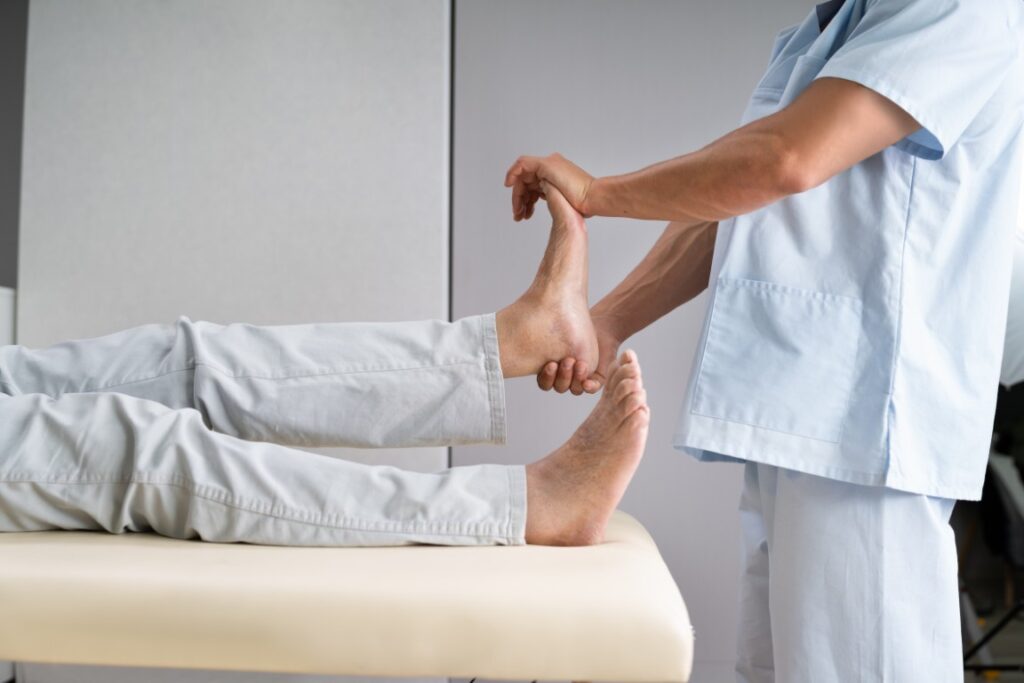
During a physical exam, the doctor will carry out specific manoeuvres to stress the peroneal tendons:
- Resisted eversion test – pain or weakness when pushing the foot outward against resistance.
- Palpation along the tendon – tenderness, swelling, or a palpable gap may be felt.
- Subluxation test – moving the ankle while applying pressure may reproduce a snapping or popping if the tendons shift out of place.
Peroneal Tendonoscopy
Some orthopaedic surgeons may recommend tendonoscopy. This minimally invasive procedure inserts a small camera through tiny incisions near the ankle. It allows direct visualisation of the tendon surfaces, helping confirm the diagnosis and assess damage. Tendonoscopy can also be combined with treatment, such as debridement (the removal of frayed tendon tissue).
Specific Considerations
Peroneal Brevis vs Peroneal Longus Tears
Although the peroneal tendons work closely together, their injuries can differ. The peroneus brevis tendon is more commonly affected, particularly where it runs along the bony outside of the ankle. At this point, it can become pinched or split, and on some occasions, it wraps around the longus tendon in what is known as a “split tear.”
By contrast, the peroneus longus tendon tends to be injured further along its course under the foot, especially near the base of the big toe, where it helps support the arch. Tears to the longus may cause arch collapse or difficulties with push-off, while brevis tears more often contribute to ankle weakness and instability.
Acute vs Chronic Peroneal Tears
The timing of injury has important implications for treatment and recovery. Acute tears typically occur after a sudden ankle sprain or traumatic event and may present with swelling, pain, and an immediate loss of function.
Chronic tears, on the other hand, develop more gradually, often in people with long-standing ankle instability or repetitive stress. These degenerative tears can be more difficult to diagnose, as symptoms may be less dramatic but more persistent.
Acute injuries may respond better to early surgical repair if severe, while chronic tears often require a combination of physiotherapy, bracing, and sometimes reconstruction.
Peroneal Tears in Athletes
Athletes place significant strain on their peroneal tendons due to rapid cutting, pivoting, and side-to-side movements. As a result, peroneal tears often occur in this group. Peroneal tears in athletes cause pain and affect performance, agility, and confidence in the ankle. A torn tendon may make it difficult for an athlete to push off, change direction, or land securely, increasing the risk of recurrent ankle sprains. Early recognition and treatment are essential in athletes, as prolonged tendon dysfunction can shorten careers or limit participation in high-level sport.
Peroneal Tendon Subluxation and Dislocation
Sometimes, peroneal tendon injuries involve more than a simple tear. The tendons can move out of their normal groove behind the ankle bone, a condition known as subluxation or dislocation. This condition often produces a snapping or popping sensation during movement. It may follow an acute injury that stretches or tears the restraining tissues or develop in those with naturally shallow tendon grooves. Subluxation not only causes pain but can also predispose the tendons to further tearing and long-term instability if not addressed.
Peroneal Tears with Ankle Instability
Many patients with peroneal tendon tears also suffer from chronic ankle instability. Repeated sprains weaken the ligaments and tendons, creating a cycle of injury and impaired stability. When tendon tears occur alongside ligament damage, the ankle may feel particularly unstable, and patients may struggle with even basic activities like walking on uneven ground. Treatment needs to address both problems through bracing, rehabilitation, and, in some cases, combined surgical procedures to restore strength and function.
Degenerative Peroneal Tendon Disease
In older individuals or those with long-standing ankle problems, degenerative tendon disease may be evident. Over time, the collagen fibres within the tendon weaken and fray, reducing the tendon’s ability to withstand normal loads. Degenerative tears may not result from a single injury but from years of cumulative stress. Symptoms include chronic ankle pain, swelling, and stiffness, and the condition may mimic arthritis or other tendon problems. Because degeneration is progressive, treatment often requires a tailored approach focusing on symptom relief, activity modification, and, in some cases, surgical reconstruction if the tendon quality is too poor to repair.
We recommend discussing degenerative peroneal tendon disease with your GP. Access Ortho only manages acute injuries.
Management and Treatment of Peroneal Tears
How are Peroneal Tears Treated?
Treatment for peroneal tendon tears depends on the injury, the patient’s activity level, and whether the tear is acute or chronic. A specialist will consider the extent of tendon damage, the presence of instability, and the patient’s goals when developing a treatment plan. In many cases, non-surgical management is trialled first, but more significant or persistent tears may require surgical repair or reconstruction.
Non-Surgical Treatment for Peroneal Tears
Conservative management is usually the first approach, particularly for partial tears and degenerative changes.
Initial care
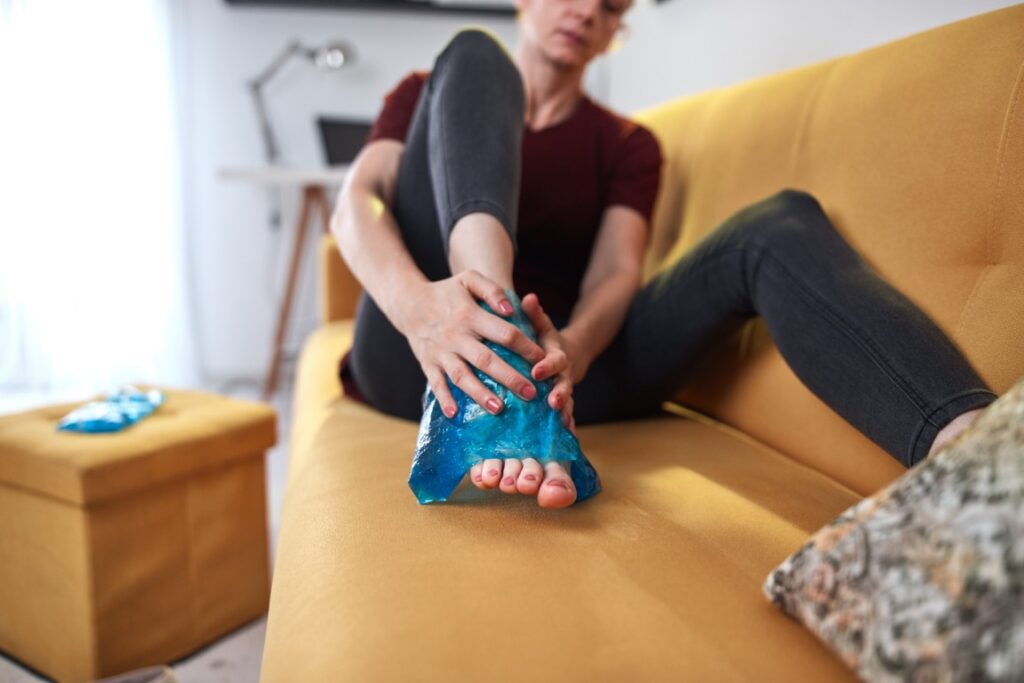
- (RICE) Rest, ice, compression, and elevation used in the early phase will help decrease pain and swelling
- Immobilisation with a boot or brace to limit stress on the tendon and promote healing
Physiotherapy
- Strengthening of surrounding muscles
- Improving ankle stability
- Restoring range of motion
Activity modification
- Avoid uneven surfaces
- Reduce or stop high-impact exercise during recovery
Medication and injections
- Anti-inflammatory medication may be prescribed
- Targeted injections can sometimes be used to manage pain and inflammation
Surgical Treatment for Peroneal Tears
Surgery may be recommended when conservative measures are unsuccessful or the tear is severe. Surgical options aim to restore tendon strength, eliminate pain, and improve ankle stability. The specific procedure will depend on the surgeon and whether the tendon can be repaired or if reconstruction is required.
Peroneal Tendon Repair Surgery
Direct tendon repair is often possible for acute or clean partial tears. During this procedure, the surgeon identifies the damaged tendon and stitches the torn fibres together. If frayed or degenerated tissue is present, it may be trimmed or smoothed to restore a healthy tendon surface. In some cases, both peroneal tendons are inspected during surgery, as injury to one tendon often places stress on the other. Repair surgery generally allows patients to regain good tendon function when performed promptly after injury.
Peroneal Tendon Reconstruction
Reconstruction may be necessary if the tendon damage is extensive or the tissue is too weak to repair. This may involve using part of a healthy tendon (such as the peroneus longus or another donor tendon) to replace the damaged segment, or grafting tissue from another part of the body. Reconstruction is more common in chronic or degenerative tears and may be combined with procedures to correct ankle instability or address bony abnormalities. The goal is to restore tendon function and prevent recurrent injuries.
Peroneal Tear Rehabilitation
Rehabilitation is essential for recovery after both surgical and conservative treatment.
Early phase
- Gentle range-of-motion exercises
- Stretching to maintain flexibility
Strengthening phase
- Focus on peroneal muscles
- Strengthening of other stabilising structures around the ankle
Balance and proprioception
- Exercises to restore ankle stability
- Reduce the risk of future sprains
Return-to-sport preparation
- Gradual introduction of sport-specific drills
- Progression tailored to the athlete’s demands
Recovery timeline
- Several weeks to months of structured rehabilitation
- Full return to high-impact activity typically takes 3–6 months after surgery
Prevention of Peroneal Tears
How can I Prevent Peroneal Tears?
While not all tendon injuries can be avoided, good ankle care and smart training habits can reduce the risk of peroneal tears.
Ankle Strengthening for Peroneal Tear Prevention
Regular exercises that build strength in the peroneal muscles and improve balance help protect the tendons. Simple movements such as resisted foot eversion, calf raises, and balance board drills can improve stability and reduce injury risk.
Proper Footwear for Peroneal Tendon Health
Supportive shoes that match your foot type are essential. People with high arches may benefit from orthotics or cushioned footwear to reduce tendon strain. Worn-out shoes should be replaced promptly.
Training Modifications to Prevent Peroneal Injuries
Gradual increases in training load, avoiding sudden spikes in activity, and allowing adequate recovery time are key to tendon health. Athletes should take extra care on uneven surfaces and include cross-training to limit repetitive stress on the ankles.
Outlook and Prognosis for Peroneal Tears
What can I expect if I have a Peroneal Tear?
Most people recover well from peroneal tendon tears with early diagnosis and appropriate treatment. The outlook depends on:
- Severity of the tear – partial vs complete
- Timing – acute vs chronic injury
- Treatment choice – non-surgical vs surgical
- Commitment to rehabilitation
Partial tears often improve with rest and physiotherapy, while more severe injuries may need surgery to restore strength and stability.
Access Ortho offers rapid appointments for acute injuries.
What is the Recovery Time from Peroneal Tears?
Recovery varies depending on the treatment approach:
- Non-surgical care: several weeks to a few months, depending on healing progress.
- Surgical repair or reconstruction: typically 3–6 months, with structured physiotherapy.
- Return to daily activity once pain, swelling, and weakness have resolved.
- Return to sport: gradual progression, often taking longer than everyday recovery.
Patience with the recovery process is important to reduce the risk of re-injury.
Long-term Outcomes of Peroneal Tear Treatment
Most patients achieve excellent function and pain relief after treatment. Long-term results depend on the quality of rehabilitation and whether other ankle problems (like instability) are addressed.
- Good outcomes: most patients return to regular activity without pain.
- Athletic performance: many athletes regain their pre-injury level with proper rehab.
- Recurrence risk: uncommon after proper repair, but higher if instability persists or rehab is incomplete.
Return to Sport After Peroneal Tendon Surgery
For athletes, returning to sport is a key milestone. Recovery involves a staged approach:
- Initial healing: protection and controlled loading in the first 6–8 weeks.
- Rehabilitation phase: strength, flexibility, and balance restored over 2–4 months.
- Sport-specific drills: gradual reintroduction before competition.
- Return to play: usually 4–6 months, though elite athletes may need longer depending on the demands of their sport.
With proper treatment, many athletes successfully resume their pre-injury performance levels.
Access Ortho treats all acute musculoskeletal injuries of the upper and lower limbs.
When should I see an Orthopaedic Specialist for Peroneal Pain?
Seek review if you experience:
- Persistent pain or swelling on the outside of the ankle
- Repeated ankle sprains or ongoing instability
- A snapping or popping sensation in the ankle
- Pain that does not improve with rest and basic care
At Access Ortho, our urgent orthopaedic injury clinics provide:
- Rapid orthopaedic assessment
- Rapid referral for imaging (X-ray, ultrasound, MRI)
- Personalised treatment and rehabilitation planning
Early review by our team can speed up diagnosis, prevent further damage, and get you back to activity sooner.
When to Seek Immediate Medical Attention
Peroneal Tear Warning Signs
While many peroneal tendon injuries can be assessed within a few days, certain symptoms suggest you should seek urgent medical attention. Warning signs include:
- Sudden, severe pain on the outside of the ankle or foot
- Inability to bear weight or walk more than a few steps
- A loud snap or pop felt or heard at the time of injury
- Rapid swelling or visible deformity around the ankle
- Numbness, tingling, or loss of foot function
If these symptoms occur, it is important to be assessed promptly to rule out serious injury such as a complete tendon rupture, associated ligament injury, or fracture.
Emergency Care for Severe Peroneal Injuries
If you have a severe ankle deformity, bleeding, pins and needles, or numbness, you should attend your nearest emergency department for urgent care. Emergency teams can provide initial stabilisation, pain relief, and imaging.
For less acute but still painful ankle injuries, such as suspected tendon tears without deformity, an urgent orthopaedic clinic like Access Ortho is the most appropriate setting. We provide imaging referrals, specialist assessment, and tailored treatment without the long wait times of a hospital.
What is a Fracture Clinic?
A fracture clinic is a specialised medical service where medical staff trained in orthopaedics diagnose and manage bones, tendons, and soft tissue injuries. These clinics provide comprehensive care for conditions such as fractures, ligament sprains, and tendon tears, including peroneal tendon injuries.
At Access Ortho, our fracture clinics in Indooroopilly and Ipswich are designed to give patients rapid access to orthopaedic expertise. We assess, diagnose, and manage acute injuries, coordinating imaging, physiotherapy, and surgical referral if required.
Access Ortho treats acute injuries. If you have concerns about chronic peroneal tears, you should discuss them with your GP.
When should I go to a Fracture Clinic for Peroneal Problems?
You should consider attending a fracture clinic if you experience any of the following symptoms after an injury:
- Ongoing lateral ankle pain that does not improve with rest
- Repeated ankle sprains or instability
- Suspected tendon tear or subluxation
- Concerns after an ankle injury where a fracture has already been excluded
At Access Ortho, patients can expect:
- Rapid access to orthopaedic specialists
- On-site clinical examination and rapid imaging referrals (X-ray, ultrasound, MRI)
- Personalised treatment planning, including non-surgical and surgical options
- Coordinated follow-up
Living with Peroneal Tendon Injuries
Activity Modifications for Peroneal Tears
Living with a peroneal tendon injury often means adjusting daily activities to protect the ankle. This may include avoiding uneven ground, limiting high-impact sports, and wearing supportive footwear or braces during recovery. Gradual return to activity, guided by a physiotherapist, helps reduce strain while maintaining mobility and fitness.
Long-term Management of Chronic Peroneal Problems
For people with ongoing tendon weakness or chronic symptoms, long-term management may be needed. This can involve regular strengthening and balance exercises, use of orthotics to support foot alignment, and activity pacing to prevent flare-ups. Ongoing monitoring by an orthopaedic or sports medicine specialist ensures the condition is managed effectively and reduces the risk of further ankle instability.
Frequently Asked Questions about Peroneal Tears
How long does a peroneal tear take to heal?
Recovery depends on the severity and type of tear and treatment choice. Mild partial tears may heal in 6–8 weeks with rest and physiotherapy, while complete tears or surgical repairs usually take 3–6 months for full recovery.
Can peroneal tears heal without surgery?
Yes, many partial tears respond well to conservative treatment such as rest, bracing, and physiotherapy. Complete ruptures and chronic tears are less likely to heal without surgery.
What does a peroneal tear feel like?
Patients often describe sharp pain or aching along the outer ankle, sometimes with swelling, weakness, or a snapping sensation during movement.
Can you walk with a torn peroneal tendon?
Walking is sometimes possible with partial tears, though usually painful and unstable. With a complete rupture, weight-bearing can be very difficult.
What happens if a peroneal tear goes untreated?
Untreated tears can lead to chronic ankle instability, repeated sprains, ongoing pain, and, in some cases, long-term joint changes or arthritis.
How do I know if I have a peroneal tear or an ankle sprain?
Both cause outer ankle pain and swelling. A sprain usually affects ligaments, while tendon tears often cause persistent weakness, pain with resisted foot eversion, or a snapping sensation. Imaging, such as MRI, is often required for confirmation.
What is the success rate of peroneal tendon surgery?
Surgery for peroneal tendon tears has high success rates. Most patients experience pain relief, restored stability, and a return to sport. Success rates are typically above 80–90% when followed by proper rehabilitation.
When can I return to running after peroneal tendon surgery?
Most people return to light jogging after about 3–4 months, gradually building to full running or sport at 4–6 months, depending on healing and strength.
Can peroneal tears cause ankle instability?
Yes. Because the peroneal tendons help stabilise the ankle, a tear can lead to repeated ankle rolling and reduced confidence in balance.
What exercises should I avoid with a peroneal tear?
Avoid high-impact sports, running, jumping, and activities on uneven surfaces until cleared by your doctor or physiotherapist. These activities place excessive stress on the tendons while healing.
Do peroneal tears show up on X-rays?
No, tendons do not show on X-rays. However, X-rays can detect associated bone injuries. Ultrasound and MRI are the preferred imaging tests for tendon tears.
Can I prevent peroneal tears from recurring?
Yes. Prevention includes ankle strengthening, balance training, supportive footwear, orthotics if needed, and avoiding sudden spikes in training intensity.
What is the difference between peroneal tendonitis and a tear?
Peroneal tendonitis is inflammation of the tendons, often from overuse, while a tear is a structural injury where the tendon fibres are damaged or split.
Should I wear an ankle brace for a peroneal tear?
Braces or supportive boots can help offload the tendon and improve stability during healing. The type of brace depends on the severity of the injury.
Can peroneal tears cause foot numbness?
Tendon tears usually do not cause numbness, but swelling or associated injuries can irritate nearby nerves, occasionally leading to tingling or numbness.
How painful are peroneal tendon tears?
Pain levels vary. Some patients report sharp pain at the time of injury, followed by aching and weakness. Chronic tears may cause more persistent discomfort than acute, severe pain.
What type of doctor treats peroneal tears?
Orthopaedic specialists and sports medicine doctors manage peroneal tendon injuries. At Access Ortho, our urgent orthopaedic injury clinics provide rapid assessment, imaging referrals, and tailored treatment plans for tendon and ankle conditions.
Can massage help with peroneal tendon injuries?
Massage may relieve tension in surrounding muscles, but it does not heal a torn tendon. It should only be used as a complementary therapy under guidance from a physiotherapist.
Are peroneal tears common in runners?
Yes, runners are at higher risk due to repetitive stress, uneven terrain, and the increased strain placed on the tendons during push-off.
What is the best treatment for chronic peroneal tendon pain?
Chronic pain often responds best to a combination of physiotherapy, supportive footwear or orthotics, and sometimes surgery if there is a degenerative tear or instability that is not responding to conservative care.