
Complete Guide to Achilles Tendon Tears – Diagnosis, Treatment and Recovery
What is an Achilles Tendon Rupture?
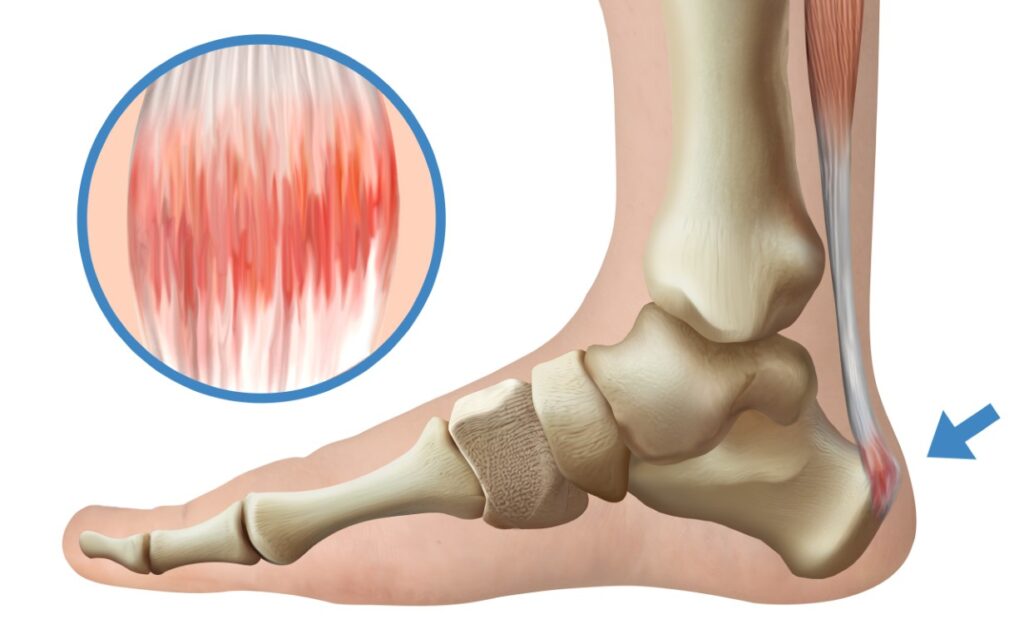
An Achilles tendon rupture, also called an Achilles tendon tear or rupture, is a complete or partial break in the largest tendon in the human body. The Achilles connects the gastrocnemius and the soleus (the two muscles in the calf) to the heel bone (calcaneus) and is essential for walking, running, jumping, and pushing off.
An Achilles rupture occurs when tensile load exceeds the tendon’s capacity, causing fibres to fail. Ruptures most often occur in the “mid-substance” zone 2–6 cm above the heel, where blood supply is relatively lower. Tears may be:
- Complete Achilles Tendon Rupture: The tendon is fully disrupted—often with a palpable gap and loss of push-off strength.
- Partial Achilles Tendon Rupture: A proportion of fibres are torn—painful with weakness, but some function remains.
What is the Achilles Tendon?
The Achilles is a strong, rope-like tendon, formed where the gastrocnemius and soleus muscles join. It transmits force for plantarflexion (pointing the foot down), stores and releases elastic energy during gait, and stabilises the ankle during sport. Healthy tendon function depends on collagen fibre alignment, adequate vascularity, and well-conditioned calf strength.
What are the Types of Achilles Tendon Ruptures?
Achilles ruptures can be classified in several ways:
- Complete ruptures involve a full break of the tendon, usually causing immediate loss of function.
- Partial ruptures affect some but not all tendon fibres, leading to pain, weakness and limited mobility.
- Acute ruptures occur suddenly, often during sports or physical activity.
- Chronic or neglected ruptures are diagnosed late, with scarred or retracted tendon ends, and often require more complex treatment.
How Common are Achilles Tendon Ruptures?
Achilles ruptures are among the most frequent tendon ruptures in adults. Incidence peaks in males aged 30–50 and in recreational “weekend warrior” athletes. Rates have risen with increased participation in running, court sports, and high-intensity fitness. In Australia, presentations commonly follow netball, basketball, AFL, and touch rugby league activities.
Achilles Rupture Classifications
Achilles ruptures can be classified based on:
- Extent of damage (complete vs partial)
- Location of the tear (insertional, mid-substance, or musculotendinous junction)
- Timing (acute vs chronic/neglected)
- Gap size on imaging helps guide whether non-operative or surgical treatment is more appropriate.
Symptoms and Causes
What Causes Achilles Tendon Ruptures?
Most Achilles tendon ruptures happen during activities that involve explosive lower-limb movements. Common scenarios include pushing off forcefully while sprinting, landing from a jump, or when a person suddenly changes direction. In other cases, a rupture can develop gradually from degenerative tendon changes due to overuse or chronic tendinopathy. Less commonly, a direct blow to the back of the ankle can cause the tendon to tear.
What are Achilles Tendon Rupture Risk Factors?
Certain factors increase the likelihood of rupture:
- Age and sex: Middle-aged men are most commonly affected.
- Sporting activity: Recreational athletes, especially those who exercise irregularly but intensely, are at risk.
- Medical factors: Diabetes, obesity and inflammatory conditions can weaken the tendon.
- Medications: Corticosteroid injections into the tendon and fluoroquinolone antibiotics are known to increase rupture risk.
- Previous tendon problems: A history of tendinopathy or calf weakness makes the tendon more vulnerable.
What are the Common Signs and Symptoms of Achilles Tendon Ruptures?
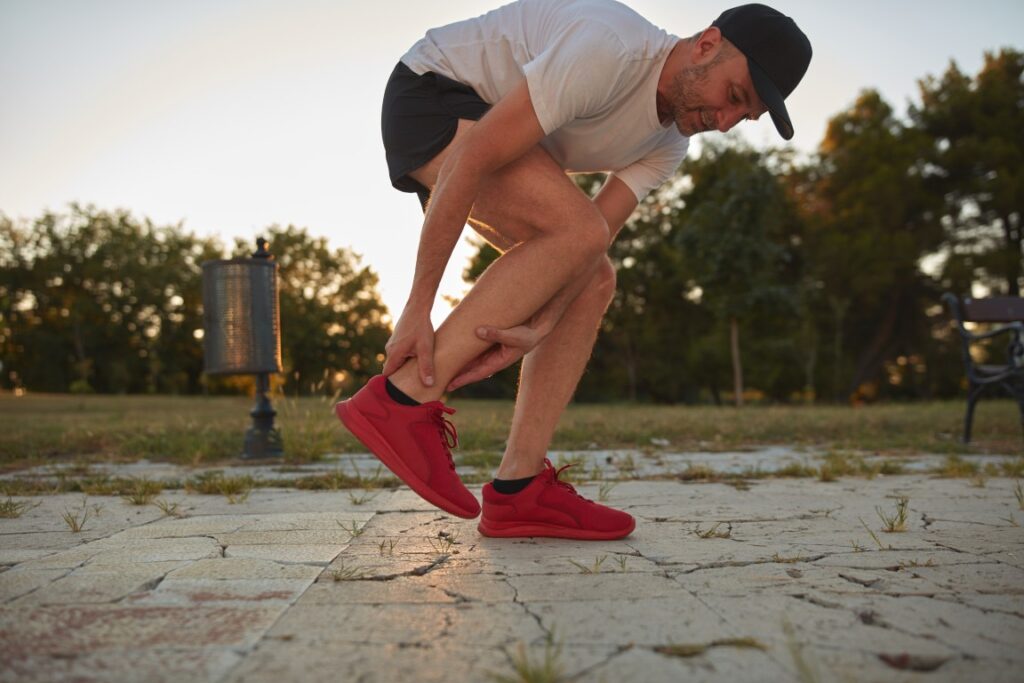
The hallmark sign is a sudden “pop” or snapping sensation in the back of the ankle, often described as feeling like being kicked. This is usually followed by sharp pain, swelling and difficulty walking. Many patients cannot rise on tiptoe or push off with the affected foot. A gap may sometimes be felt along the tendon.
What are the Common Complications of Achilles Tendon Ruptures?
If not managed properly, complications may include:
- Re-rupture of the tendon
- Chronic weakness and reduced calf strength
- Stiffness and limited ankle mobility
- Lengthening of the tendon, which reduces push-off power
- In surgical cases, wound healing problems or nerve irritation, though these are less common
Diagnosis and Tests
How are Achilles Tendon Ruptures Diagnosed?
The diagnosis of Achilles tendon ruptures begins with a careful history and physical examination. Patients usually describe a sudden “pop” at the back of the ankle with immediate pain and weakness. On examination, swelling and bruising may be present, and the clinician may feel a gap in the tendon. In most cases, these clinical findings are sufficient to strongly suggest a rupture, with imaging used to visualise the injury to confirm the diagnosis and assess the extent of damage.
Which Tests do Providers Use to Diagnose Achilles Tendon Ruptures?
Doctors use a combination of physical tests and imaging studies. Clinical tests such as the Thompson (calf squeeze) test are quick and reliable, while ultrasound or MRI provide detailed information about the tear. Together, these help guide whether surgery or non-operative management is most appropriate.
Achilles Rupture Physical Examination Tests
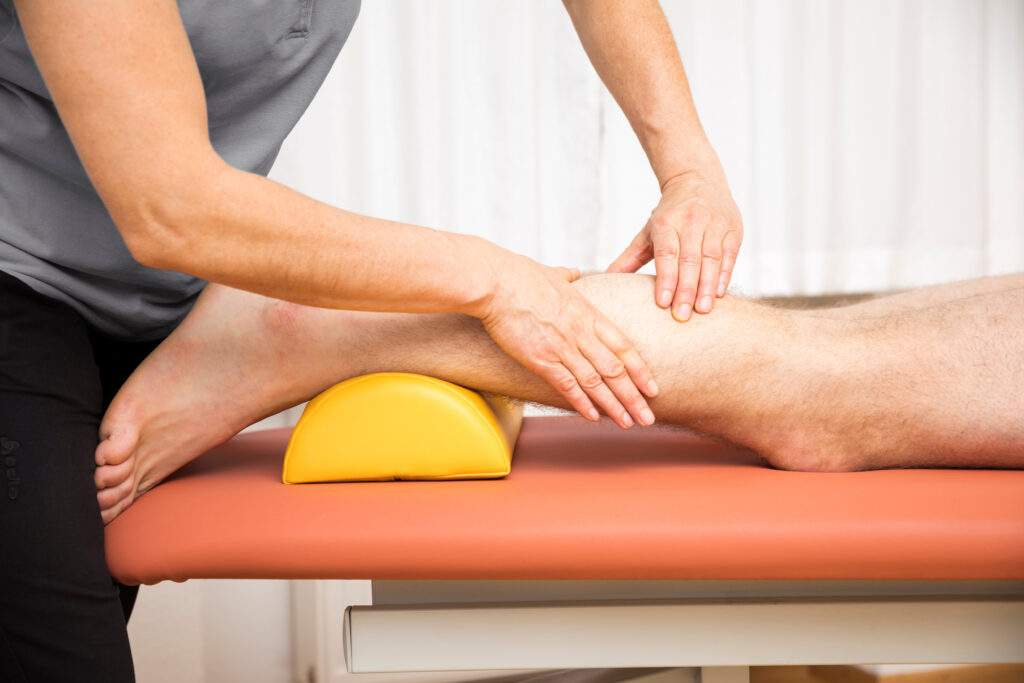
- Thompson (Simmonds) test: With the patient lying on their stomach, squeezing the calf should cause the foot to point downward. A lack of movement strongly suggests a complete rupture.
- Matles test: With the knees bent at 90°, the injured ankle often falls into more dorsiflexion compared to the healthy side.
- Palpation: A gap may be felt in the tendon, often accompanied by tenderness and swelling.
- Single-leg heel raise: Most patients with a complete rupture cannot rise onto the toes of the injured side.
Achilles Rupture Imaging Studies
If the medical team has concerns about an Achilles rupture, imaging, such as ultrasound or MRI, may be necessary.
- Ultrasound is quick, inexpensive and excellent at showing whether the tendon is completely or partially torn. It also allows real-time assessment of tendon ends and gap size.
- MRI is more detailed and is often used when the diagnosis is unclear, in partial tears, or when surgery is being considered. It can provide information about tendon quality, retraction and associated injuries.
Achilles Tendon Gap Assessment
Assessing the gap between the torn tendon ends helps guide treatment. If the tendon ends come together when the ankle is placed in plantarflexion (toes pointed downward), non-surgical treatment may be effective. Larger gaps or poor tendon quality often require surgical repair or reconstruction.
Specific Considerations
Acute vs Chronic Achilles Tendon Ruptures
An acute rupture is diagnosed within days to weeks and usually allows for straightforward treatment, either surgical repair or functional rehabilitation. A chronic or neglected rupture, diagnosed after more than six weeks, is more complex. Scar tissue, retracted tendon ends, and calf muscle wasting may be present, and reconstruction is often required.
Achilles Ruptures in Athletes
For competitive athletes, the focus is on tendon healing and restoring explosive power and push-off strength. Rehabilitation is sport-specific, with careful monitoring of strength symmetry and jump performance before return to competition. Return-to-play protocols are strict to minimise the risk of re-injury.
Achilles Ruptures in Weekend Warriors
Recreational athletes, sometimes called “weekend warriors,” are prone to Achilles ruptures due to irregular training loads and poor conditioning. Management of ruptures in this population needs to include education on training safely, structured rehabilitation, and long-term strategies to prevent recurrence.
Insertional vs Mid-Substance Achilles Ruptures
Most ruptures occur in the mid-substance region, a few centimetres above the heel bone, where blood supply is limited. These typically respond well to standard treatment. Insertional ruptures, where the tendon tears away from the heel bone, are less common and may require specialised surgical techniques.
Achilles Ruptures in Older Adults
Older patients may prioritise walking and daily function rather than returning to sport. Therefore, non-surgical functional treatment is often successful in these patient groups, reducing the risks associated with surgery. Rehabilitation focuses on safe mobility, balance, and independence.
Bilateral Achilles Ruptures
Although rare, ruptures can occur in both tendons, sometimes simultaneously. These cases are more disabling and often linked to systemic diseases, medications or underlying tendon degeneration. Treatment requires careful planning and often staged rehabilitation.
Management and Treatment
How are Achilles Tendon Ruptures Treated?
Management is tailored to each patient. Both surgical and non-surgical approaches can be successful, but the decision depends on the type of rupture, the size of the gap, the patient’s age, activity level and personal goals. Early diagnosis improves the chances of achieving a strong and functional outcome.
Non-Surgical Treatment for Achilles Tendon Ruptures
Conservative treatment involves immobilisation in a boot with the foot pointed downward, gradually moving the foot back to neutral over several weeks. Early weight-bearing and physiotherapy are critical to prevent stiffness and loss of strength. With modern functional protocols, non-surgical outcomes are comparable to surgery in many patients.
Surgical Treatment for Achilles Tendon Ruptures
Surgery is often considered for younger, athletic, or highly active patients or when the tendon ends cannot be brought together in a functional position. Surgery involves stitching the torn ends together (primary repair) or using tendon transfers or grafts in chronic cases. It helps restore tendon continuity and may reduce re-rupture risk, but it carries risks such as infection or wound problems.
If surgery is recommended, the Access Ortho team will arrange a referral.
Achilles Tendon Repair Surgery
In acute ruptures, surgeons typically use strong suturing techniques (such as the Krackow stitch) to join the tendon ends securely. This is done through an open incision or minimally invasive techniques with smaller cuts. The goal is to restore tendon length and tension so the calf muscles can work effectively.
Achilles Tendon Reconstruction
Reconstruction may be necessary for chronic or neglected ruptures or where tendon quality is poor. Surgeons may use a tendon graft, such as transferring the flexor hallucis longus (big toe flexor), or perform a V-Y advancement of the calf muscle. These techniques bridge gaps and restore push-off strength.
Achilles Rupture Rehabilitation
Rehabilitation is as important as the initial treatment. Patients progress through carefully timed phases:
- Early phase: protection in a boot and gentle isometrics.
- Controlled mobility: gradual movement of the ankle and increased weight-bearing.
- Strengthening: calf raises, balance and coordination exercises.
- Power development: hopping, jumping and sport-specific drills.
- Return to sport or full activity: when strength and endurance are nearly equal to the uninjured side.
Early vs Late Mobilisation After Achilles Surgery
Research supports early mobilisation and weight-bearing under professional supervision. This helps maintain calf strength, prevents stiffness, and improves long-term function without increasing the risk of re-rupture. However, complex reconstructions or high-risk cases may still require longer immobilisation.
Prevention
How Can I Prevent Achilles Tendon Ruptures?
Prevention strategies focus on keeping the tendon strong, flexible and well-conditioned. Regular calf strengthening, gradual increase in training and appropriate footwear all help reduce the risk. Athletes should avoid sudden spikes in activity, especially after a break from sport.
Achilles Tendon Conditioning and Strengthening
Strong and well-conditioned calf muscles are essential for protecting the Achilles tendon. The calf has two main muscles: the gastrocnemius, which works most when the knee is straight, and the soleus, which is more active when the knee is bent. Training both is important because they work together to support the ankle and absorb high forces during running and jumping.
Simple bodyweight calf raises are a good starting point.
- Straight-knee calf raises strengthen the gastrocnemius.
- Bent-knee calf raises target the soleus, which plays a key role in endurance and stability.
One of the most effective forms of strengthening is eccentric loading, which involves slowly lowering the heel from a raised position. Research has shown that eccentric exercises build tendon strength and help prevent and treat Achilles tendinopathy. For example, standing on a step, rising up with both feet, then lowering down slowly on the affected leg helps condition the tendon under controlled tension.
As strength improves, progression can include:
- Single-leg calf raises for added challenge
- Weighted calf raises with dumbbells or a barbell
- Plyometric exercises (such as skipping, hopping and bounding) are performed once basic strength and control are established
Consistency is key. Regularly performing these exercises as part of a conditioning program helps maintain tendon health, reduces the risk of rupture, and supports safe return to sport or high-demand activity.
Proper Warm-up for Achilles Injury Prevention
A good warm-up before any activity increases blood flow and tendon elasticity. Warm-up should include light aerobic exercise, dynamic stretches, and sport-specific drills, as these prepare the tendon for explosive activity.
Footwear and Achilles Rupture Prevention
Shoes with adequate heel support and cushioning reduce stress on the tendon. For athletes, using sport-specific footwear and replacing worn-out shoes promptly helps maintain protection.
Outlook / Prognosis for Achilles Tendon Rupture
What can I expect if I have an Achilles Tendon Rupture?
With the appropriate diagnosis, treatment and rehabilitation plan, most patients recover good function and can return to normal daily activities. Athletes can often return to sport, although recovery may take several months, and some may notice a subtle loss of calf strength.
What is the Recovery Time from Achilles Tendon Rupture?
Recovery varies depending on whether surgery is performed, but most people return to walking in regular shoes by around 8–12 weeks. Running may be possible by 4–6 months, with return to sport typically between 6–12 months.
Long-term Outcomes After Achilles Rupture Treatment
Most patients report high satisfaction, but some experience reduced endurance, calf weakness, or tendon lengthening that affects push-off power. Outcomes are best when rehabilitation is followed carefully.
Return to Sport After Achilles Tendon Surgery
Return to sport is based on strength testing and functional assessments rather than time alone. Many athletes resume competition between 6 and 12 months after injury, though some elite players may require up to a year before regaining full performance.
Achilles Re-rupture Risk and Prevention
The risk of re-rupture is low with modern protocols, but it can occur if rehabilitation is rushed or incomplete. Careful adherence to a graded program and ongoing calf conditioning are the best defences against recurrence.
When should I see an Orthopaedic Specialist for Achilles Problems?
If you feel a sudden pop in the back of your ankle, cannot push off with your foot, or have severe swelling and pain, you should see an orthopaedic specialist immediately. Early diagnosis and management improve outcomes and may allow for less invasive treatment options. Access Ortho (Indooroopilly & Ipswich, QLD) provides urgent orthopaedic assessment, rapid imaging referrals, and tailored treatment for Achilles tendon ruptures. Our team can arrange immobilisation, surgical referral if needed, and referral to physiotherapy-led rehabilitation programs to help you recover safely.
When to Seek Immediate Medical Attention
Achilles Rupture Emergency Signs
Seek urgent care if you experience:
- A sudden snap or pop in the calf or ankle
- Inability to push off or rise onto your toes
- Rapid swelling, bruising or severe pain
Suspected Achilles Tendon Rupture First Aid
If you suspect a rupture:
- Stop activity immediately
- Rest, ice, compress and elevate the leg
- Keep the ankle pointed downward in a comfortable position
- Use crutches to avoid weight-bearing
- Arrange an urgent assessment at a fracture clinic or emergency department
What is a Fracture Clinic?
A fracture clinic is a specialised medical facility that manages bone, tendon and soft tissue injuries. Patients with suspected Achilles ruptures are assessed, immobilised, referred for imaging and given a treatment plan.
At Access Ortho, our clinics provide rapid access to orthopaedic expertise, same-day assessment and coordinated care pathways for Achilles injuries.
When should I visit a Fracture Clinic for an Achilles Rupture?
If you suspect a rupture, you should attend a fracture clinic immediately. Expect a thorough physical examination, imaging referral, boot fitting if required, and a personalised treatment and rehabilitation plan.
Access Ortho is a private fracture clinic in Brisbane and Ipswich, staffed by medical professionals trained in treating orthopaedic injuries.
Living with Achilles Tendon Injuries
Activity Modifications During Achilles Recovery
Daily activity often needs to be adjusted during the recovery period. Patients may need to use crutches, take care on uneven ground, and rely on cross-training activities such as cycling or swimming while the tendon heals.
Long-term Care After Achilles Rupture Treatment
Long-term care includes maintaining calf strength, stretching and balance work. Training loads should be gradually increased. Regular monitoring and self-care help reduce the risk of recurrence.
Frequently Asked Questions about Achilles Tendon Ruptures
How long does an Achilles tendon rupture take to heal?
Healing time depends on whether the rupture is treated surgically or non-surgically and on the patient’s rehabilitation program. Most people can expect to walk in normal shoes again by around 8–12 weeks. Returning to jogging usually takes 4–6 months, while a full return to sport or high-demand activity often takes 6–12 months. Recovery is gradual, and consistency with rehabilitation is key.
Can Achilles tendon ruptures heal without surgery?
Yes. Modern non-surgical protocols that use functional bracing and early physiotherapy have been shown to achieve similar outcomes to surgery in many cases. Success is highest when the rupture is diagnosed early, the tendon ends can be brought together in a boot, and patients follow a structured program closely.
What does an Achilles tendon rupture feel like?
Most people describe hearing or feeling a sudden pop or snap in the back of the ankle, often compared to being kicked or hit. This is usually followed by sharp pain, swelling, and difficulty walking or pushing off the foot.
Can you walk when you have a ruptured Achilles tendon?
Surprisingly, some people can still walk with a complete rupture, but they usually do so flat-footed and without being able to push off properly. Walking is often painful, weak and unsteady. Crutches and a boot are generally required until proper treatment begins.
What happens if an Achilles rupture goes untreated?
An untreated rupture may heal in a lengthened position, leaving permanent weakness, reduced push-off power, and difficulty returning to sport. There is also an increased risk of re-rupture and chronic disability if treatment is delayed.
How do I know if I’ve torn my Achilles tendon?
The classic signs are a sudden pop in the back of the leg, immediate pain, difficulty rising onto tiptoe, and swelling around the ankle. A gap may be felt in the tendon. If you suspect a rupture, seek urgent assessment, as early treatment improves outcomes.
What is the Thompson test for Achilles rupture?
The Thompson (or Simmonds) test is a simple clinical check. With you lying face down and your knee bent, the clinician squeezes your calf. If the Achilles tendon is not torn, the foot will point downward. If it does not move, a rupture is very likely.
What is the success rate following Achilles tendon surgery?
Surgery has a high success rate, with most patients regaining good function and strength. Modern repair techniques combined with early rehabilitation show very good results. Risks include infection, wound issues and nerve irritation, but these are uncommon.
When can I return to running after an Achilles rupture?
Depending on strength, flexibility, and confidence, running usually resumes between 4 and 6 months after injury. Return is gradual, often starting with short intervals of walk-jog and progressing to continuous running as function improves.
Can Achilles tendons rupture again after healing?
Yes, re-rupture is possible but uncommon with modern treatment. The risk is highest in the first 6–12 months. Following your rehabilitation program carefully and gradually returning to activity helps minimise this risk.
Is surgery always necessary for Achilles ruptures?
No. Surgery is often recommended for younger, athletic patients or those with large tendon gaps. Non-surgical management can be just as effective in carefully selected patients. The choice depends on your goals, activity level, and the tendon’s condition.
How painful is an Achilles tendon rupture?
Most people feel a sudden sharp pain at the moment of rupture, which may ease fairly quickly. After the initial injury, pain is often less intense than expected, but weakness and swelling make walking difficult. Pain during recovery is usually well-managed with rest, medication and structured rehab.
What causes Achilles tendons to rupture suddenly?
Sudden high forces, such as sprinting, jumping, or changing direction, can overload the tendon. Many ruptures occur in people with underlying tendon degeneration from overuse, age-related changes, or poor conditioning. Medications like steroids or certain antibiotics may also weaken the tendon.
Can I drive with an Achilles tendon rupture?
Driving is unsafe, especially with a rupture on the right side, until strength and control are restored. Most people cannot drive while in a boot or using crutches. Your clinician will advise when it is safe, usually several weeks into recovery.
What is the difference between Achilles tendinitis and rupture?
Achilles tendinitis (more accurately called tendinopathy) is an overuse injury in which the tendon becomes painful, thickened, and inflamed but remains intact. A rupture may be a complete or partial tear of the tendon, often with a sudden loss of function.
How long will I be in a cast after Achilles surgery?
Many modern protocols use a boot instead of a cast. Immobilisation in a boot with heel wedges typically lasts 6–8 weeks, with gradual removal of wedges and progressive weight-bearing. Casts may still be used in some cases for the first 2 weeks after surgery.
Can both Achilles tendons rupture at the same time?
Yes, but this is very rare. Bilateral ruptures are usually linked to systemic conditions, medications such as corticosteroids or fluoroquinolones, or longstanding tendon disease.
What are the long-term effects of Achilles rupture?
Most people return to normal daily function. However, some may notice reduced calf strength, loss of explosive push-off, or reduced endurance in high-level sports. With good rehabilitation, long-term outcomes are usually positive.
Should I use crutches with an Achilles rupture?
Crutches are typically needed in the early stages to protect the tendon and reduce pain while using a boot or cast. As healing progresses, weight-bearing is gradually increased under physiotherapy guidance.
What exercises help strengthen the Achilles tendon after injury?
Rehabilitation exercises include calf raises, heel drops, bent-knee calf strengthening, balance training, and eventually plyometric drills like hopping and skipping. These exercises should be introduced gradually under professional supervision.
Can Achilles ruptures be prevented in athletes?
Yes, prevention focuses on strong, flexible calves, gradual training increases, and avoiding sudden spikes in activity. Regular eccentric calf strengthening and proper footwear also reduce risk.
What is the best treatment for Achilles tendon rupture?
The best treatment depends on the individual. For many patients, non-surgical treatment with functional bracing and rehab is highly effective. For younger or high-level athletes, surgery may be preferred. The key is early diagnosis, appropriate treatment selection, and committed rehabilitation.