

Complete Guide to Diagnosis, Treatment and Recovery of Ankle Ligament Injuries
What are Ankle Ligament Injuries?
Ankle ligament injuries occur when the strong bands of connective tissue that stabilise the ankle joint are stretched, partially torn, or completely ruptured. These ligaments act like the “seatbelts” of the ankle, keeping the bones aligned and preventing excessive movement.
When force pushes the ankle beyond its normal range, such as rolling the foot inwards, twisting outwards, or landing awkwardly from a jump, the ligaments may fail, resulting in pain, swelling, and loss of stability.
Anatomy of Ankle Ligaments
The ankle joint is supported by three main groups of ligaments:
- Lateral ligaments (outside of the ankle):
- Anterior talofibular ligament (ATFL) – the most commonly injured ligament.
- Calcaneofibular ligament (CFL).
- Posterior talofibular ligament (PTFL).
- These ligaments resist excessive inward rolling (inversion).
- Medial ligament (inside of the ankle):
- Deltoid ligament complex – a strong, broad ligament that prevents outward rolling (eversion).
- Injuries here are less common but often more severe.
- Syndesmosis (high ankle ligaments):
- Anterior inferior tibiofibular ligament (AITFL).
- Posterior inferior tibiofibular ligament (PITFL).
- Interosseous ligament and membrane.
- These ligaments hold the tibia and fibula together just above the ankle. Damage here is known as a high ankle sprain and is typically more complex.
What are the Different Types of Ankle Ligament Injuries?
Ankle ligament injuries are categorised based on which ligaments are involved and the severity of the damage.
1. Lateral Ankle Ligament Injuries
- Lateral Ankle Ligament Injuries are the most common type, accounting for up to 80–85% of ankle sprains.
- Caused by rolling the ankle inward (inversion).
- Often affects the ATFL, sometimes with CFL involvement in more severe sprains.
2. Medial Ankle Ligament Injuries
- The strength of the deltoid ligament makes medial ankle ligament injuries less common.
- It usually occurs with outward rolling of the ankle (eversion) or alongside fractures.
- It can be serious and often associated with high-energy trauma or sports collisions.
3. High Ankle Sprains (Syndesmotic Injuries)
- High Ankle Sprains involve the ligaments lying between the tibia and fibula.
- Typically caused by twisting forces when the foot is planted.
- Often seen in football, rugby, soccer, and skiing.
- These injuries take longer to heal and may require surgical stabilisation.
How Common are Ankle Ligament Injuries?
Ankle ligament injuries are a very common musculoskeletal injury worldwide.
- In Australia, ankle sprains account for around 5–10% of all sports-related injuries treated in emergency departments.
- Globally, ankle sprains represent an estimated 2–7 injuries per 1,000 people annually.
- Lateral ankle sprains make up the majority, especially in running, court, and field-based sports.
- Studies show that if not adequately treated, up to 40% of people with ankle sprains experience lingering issues such as pain, swelling, or recurrent sprains.
- High ankle sprains are less common but represent a significant portion of severe ankle injuries in athletes, particularly in sports involving twisting and contact.
This high prevalence underlines the importance of early diagnosis, appropriate management, and guided rehabilitation to prevent chronic ankle instability. Every year, the team at Access Ortho manages many ankle ligament injuries, helping patients get back on their feet sooner.
Symptoms and Causes of Ankle Ligament Injuries
What Causes Ankle Ligament Injuries?
Ankle ligament injuries usually occur when the ankle joint is forced beyond its normal limits. The most common mechanisms include:
- Inversion injuries (rolling the ankle inward):
- The most frequent cause is stressing the lateral ligaments (ATFL, CFL).
- Often occurs during running, jumping, or landing on uneven surfaces.
- Eversion injuries (rolling the ankle outward):
- The strength of the deltoid ligament makes these less common.
- Often associated with fractures on the inside of the ankle.
- High ankle sprains (syndesmosis injuries):
- Caused by twisting the foot outward while the leg rotates inward, forcing the tibia and fibula apart.
- Seen in sports with pivoting, contact, or high-speed direction changes (rugby, soccer)
What are Ankle Ligament Injury Risk Factors?
Certain factors increase the likelihood of ankle ligament injuries, including:
- Previous ankle injuries: Weakness and instability after a prior sprain raise the risk of re-injury.
- Sports participation: High rates occur in sports with jumping, pivoting, and contact (basketball, netball, rugby, soccer).
- Anatomical factors: High-arched feet, poor balance, or joint laxity predispose to instability.
- Footwear: Inappropriate or worn-out shoes with poor ankle support increase risk, especially on uneven ground.
- Playing surface: Wet, uneven, or slippery surfaces raise the chance of sudden twists and rolls.
What are the Common Symptoms of Ankle Ligament Injuries?
Symptoms vary depending on which ligaments are injured and the severity:
- Pain:
- Lateral injuries – pain on the outside of the ankle.
- Medial injuries – pain on the inside of the ankle.
- High ankle sprains – pain above the ankle joint, often extending up the leg.
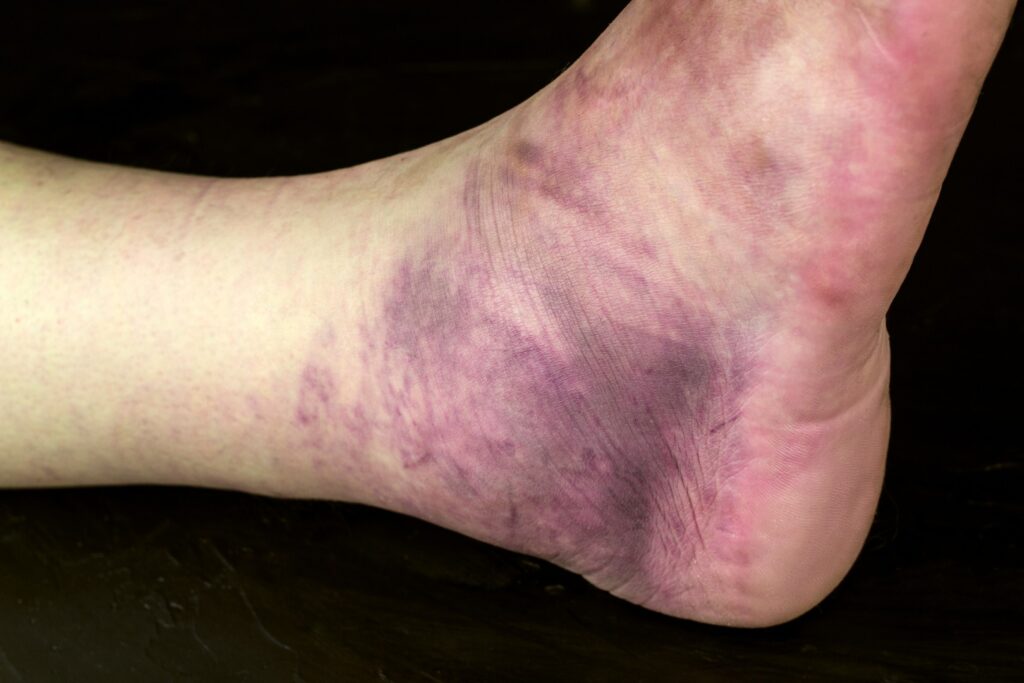
- Swelling and bruising:
- Swelling usually develops quickly around the injured side.
- Bruising can spread under the foot or up the leg over several days.
- Instability:
- A feeling that the ankle is “giving way,” particularly on uneven ground.
- Difficulty with weight-bearing:
- Mild sprains may allow walking with a limp.
- Severe sprains or ruptures may prevent weight from being put through the ankle.
- Loss of function:
- Reduced range of motion and difficulty pushing off when walking or running.
What are the Complications of Ankle Ligament Injuries?
If not appropriately treated, ankle ligament injuries can lead to both short-term and long-term problems:
- Short-term complications:
- Ongoing pain and swelling.
- Prolonged difficulty walking or returning to sport.
- Long-term complications:
- Chronic ankle instability – recurrent sprains due to weakened ligaments.
- Recurrent sprains – up to 40% of patients experience repeated ankle injuries.
- Arthritis development – repeated trauma or instability can damage cartilage, leading to early ankle arthritis.
- Reduced athletic performance – persistent instability, pain, or weakness may limit return to pre-injury activity levels.
Access Ortho has musculoskeletal urgent injury clinics in Brisbane and Ipswich, offering rapid appointments for acute injuries such as ankle ligament sprains.
Diagnosis and Tests for Ankle Ligament Injuries
How are Ankle Ligament Injuries Diagnosed?
Accurate diagnosis is required to ensure effective treatment and prevent long-term complications. At Access Ortho, diagnosis begins with a comprehensive clinical examination:
- History: How the injury occurred (twisting, landing, or contact), previous ankle injuries, and ability to continue activity after the incident.
- Inspection: Checking for swelling, bruising, deformity, or abnormal positioning of the ankle.
- Palpation: Identifying tenderness over specific ligaments, bones, or syndesmosis.
- Stability assessment: Applying gentle stress to the ankle joint to assess ligament integrity.
- Functional tests: Assessing weight-bearing ability and walking pattern.
Which Tests do Providers Use to Diagnose Ankle Ligament Injuries?
Different imaging and diagnostic tests help confirm the type and severity of ankle ligament injury:
- X-rays
- Pros: Quick, widely available, excellent for detecting fractures and joint alignment changes.
- Cons: Do not show ligament tears directly.
- MRI (Magnetic Resonance Imaging)
- Pros: Gold standard for detecting ligament and cartilage injuries. Provides detailed images of soft tissues.
- Cons: More expensive, less accessible in urgent settings.
- Ultrasound
- Pros: Useful for dynamic assessment, portable, and no radiation exposure.
- Cons: Operator-dependent, less precise for deep structures compared with MRI.
- Stress Radiographs
- Pros: X-rays taken under stress can reveal instability or widening of the joint in syndesmosis injuries.
- Cons: Less commonly used now due to advances in MRI/CT imaging.
- CT (Computed Tomography) Scans
- Pros: Excellent for detecting small fractures and assessing complex ankle joint anatomy.
- Cons: Higher radiation exposure, usually reserved for surgical planning.
Ankle Ligament Injury Grading System
Ankle ligament injuries are put into three grades:
- Grade 1 (Mild):
- Microscopic stretching of ligament fibres.
- Mild pain, minimal swelling, no significant instability.
- Recovery: typically 1-3 weeks.
- Grade 2 (Moderate):
- Partial ligament tear.
- Moderate pain, swelling, and bruising.
- Some instability and difficulty with weight-bearing.
- Recovery: 4-6 weeks.
- Grade 3 (Severe):
- Complete ligament rupture.
- Severe pain (initially), extensive swelling/bruising.
- Significant instability, often unable to walk.
- May require surgical stabilisation.
- Recovery: 8+ weeks, sometimes months.
Specific Ankle Ligament Tests and Examinations
During clinical assessment, orthopaedic providers use targeted physical tests to assess ligament integrity:
- Anterior Drawer Test: Evaluates the ATFL (anterior talofibular ligament). A forward shift of the talus indicates injury.
- Talar Tilt Test: Tests the CFL (calcaneofibular ligament). Excessive tilt of the talus suggests ligament laxity.
- Eversion Stress Test: Assesses the deltoid ligament on the inside of the ankle.
- Squeeze Test: Compressing the tibia and fibula together at the mid-calf causes pain at the syndesmosis if a high ankle sprain is present.
- External Rotation Test: Rotating the foot outward stresses the syndesmosis ligaments.
These tests, combined with imaging, allow precise diagnosis.
When to Seek Immediate Medical Attention for Ankle Ligament Injuries
Not all ankle sprains are minor. Seek urgent medical attention if you experience:
- Inability to take any weight on the injured ankle immediately after injury.
- Severe swelling or rapid onset bruising.
- Obvious deformity of the ankle or foot.
- Persistent pain above the ankle joint (possible high ankle sprain).
- Numbness, tingling, or cold foot (signs of impaired circulation or nerve involvement).
Access Ortho offers a faster, specialist alternative to the emergency department:
- Same-day or next-day appointments for acute injuries.
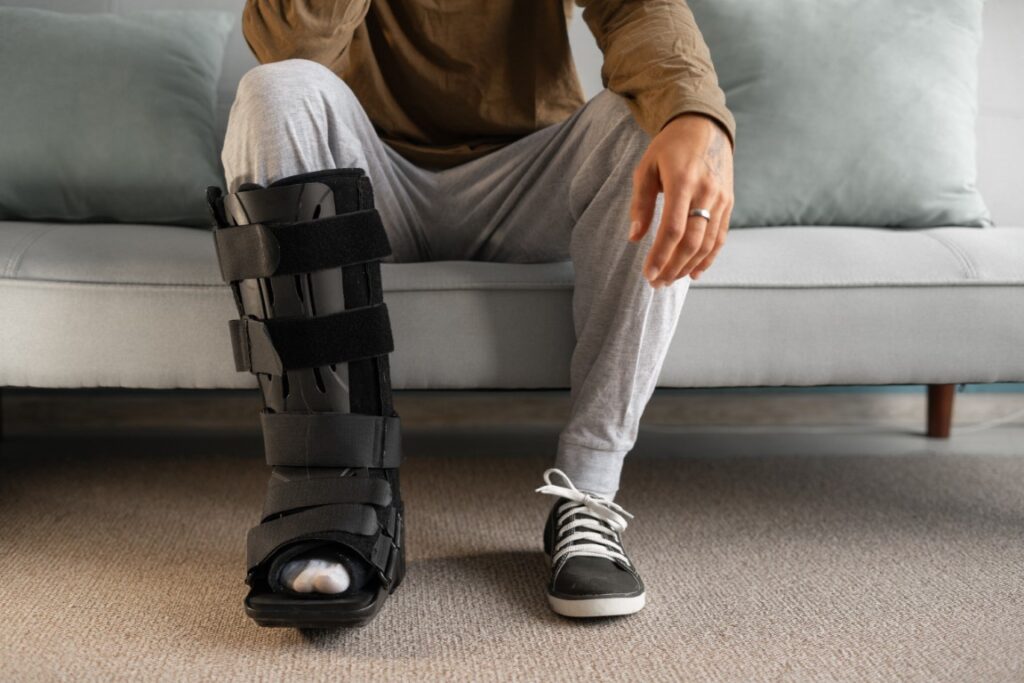
- On-site orthopaedic assessment and stabilisation (boots, braces, crutches provided immediately).
- Rapid imaging referrals to confirm diagnosis.
- Early treatment planning and follow-up can reduce the risk of missed injuries or chronic ankle instability.
We focus on getting the diagnosis right the first time and ensuring a safe, structured path to recovery.
Management and Treatment of Ankle Ligament Injuries
How are Ankle Ligament Injuries Treated?
Treatment depends on how severe the ligament damage is, the patient’s activity level, and whether there are associated injuries such as fractures.
- Mild injuries (Grade 1): Usually respond well to conservative management.
- Moderate injuries (Grade 2): Often require bracing, longer rest, and structured rehabilitation.
- Severe injuries (Grade 3): May need surgical stabilisation followed by an extended rehabilitation program.
The goal of treatment is to reduce pain and swelling, restore ankle stability, and prevent long-term complications such as chronic ankle instability.
Non-Surgical Treatment for Ankle Ligament Injuries
Most ankle ligament injuries can be treated without surgery. Access Ortho clinicians use evidence-based conservative management, including:
- RICE Protocol (Rest, Ice, Compression, Elevation): Reduces swelling and pain in the early phase.
- Immobilisation and Support: Braces, walking boots, or strapping may be used to protect healing ligaments.
- Weight-Bearing Progression: Guided return to walking, starting with crutches if necessary, and advancing as tolerated.
- Physiotherapy: Restores movement, strength, and balance while reducing the risk of recurrent injury.
This approach is particularly effective for Grade 1 and many Grade 2 injuries, enabling safe return to activity without surgical intervention.
Surgical Treatment for Severe Ankle Ligament Injuries
Surgery may be required for:
- Grade 3 ruptures, where the ankle remains unstable.
- Failed conservative management, where instability persists after months of rehabilitation.
- Associated fractures or syndesmosis injuries (high ankle sprains).
- Chronic ankle instability occurs when repeated sprains have weakened the ligaments.
Surgical options include:
- Direct ligament repair: Suturing torn ligaments back together, often reinforced with anchors or internal bracing.
- Ligament reconstruction: Using tendon grafts (from the patient or donor tissue) to restore stability if ligaments are too damaged for repair.
- Syndesmosis stabilisation: Screws or “tightrope” fixation devices are used in high ankle sprains to hold the tibia and fibula together during healing.
If you require surgery, the team at Access Ortho will arrange a surgical referral for you.
Ankle Ligament Injury Rehabilitation and Physiotherapy
Many ankle injuries require rehabilitation. This is managed with physiotherapy.
Phase 1: Acute management – swelling control, pain relief, protection of injured structures.
Phase 2: Early mobility – gentle range-of-motion and stretching exercises.
Phase 3: Strengthening – targeted strengthening of ankle stabilisers, calf, and lower limb muscles.
Phase 4: Proprioception and balance training – wobble boards, single-leg drills, and sport-specific retraining to restore coordination.
Phase 5: Return to activity – graded return to running, pivoting, and sport under supervision.
This structured approach reduces re-injury risk and helps patients confidently return to their chosen activity.
Chronic Ankle Instability Treatment Options
Some patients experience chronic ankle instability — recurrent sprains, weakness, or “giving way” months after the initial injury. Access Ortho guides patients on how to avoid these and, if they occur, how to manage them. The following can be beneficial.
- Advanced physiotherapy programs focusing on balance, agility, and functional strengthening.
- Ankle braces or orthotics for added support during sport and activity.
- Injection therapies (such as platelet-rich plasma, PRP) are used in select cases to promote healing.
- Surgical stabilisation for persistent instability despite rehabilitation.
We aim to restore long-term stability and prevent further cartilage or joint damage.
Pain Management for Ankle Ligament Injuries
Effective pain control supports recovery and rehabilitation. Access Ortho provides a variety of options depending on the severity and stage of injury:
- Medications: Anti-inflammatories and pain relievers for short-term symptom relief.
- Local treatments: Ice therapy, compression bandaging, or topical gels.
- Injection therapies: In persistent cases, Corticosteroid injections (rarely used in acute sprains but sometimes for chronic inflammation) or regenerative injections (e.g., PRP).
Pain management is always personalised, ensuring patients are comfortable enough to engage in rehabilitation while protecting the healing ligaments.
Prevention of Ankle Ligament Injuries
How Can I Prevent Ankle Ligament Injuries?
While not every ankle injury can be avoided, the risk can be significantly reduced with proactive strategies:
- Ankle strengthening exercises: Targeting the calf, peroneal muscles, and intrinsic foot muscles provides stability to the joint.
- Balance and proprioception training: Wobble boards, single-leg drills, and dynamic balance activities improve coordination and reduce the chance of missteps.
- Proper footwear: Supportive shoes designed for the specific sport or activity, with good ankle support and non-worn soles, lower the risk of rolling or twisting.
- Warm-up and flexibility routines: Dynamic stretches and activation exercises before activity prepare ligaments and muscles for sudden movements.
Ankle Ligament Injury Prevention for Athletes
Athletes are at higher risk due to rapid direction changes, contact, and repetitive stress. Sport-specific strategies include:
- Taping or bracing: Provides external support, particularly for players with a history of ankle sprains.
- Sport-specific drills: Practising controlled cutting, landing, and pivoting techniques helps train safe movement patterns.
- Strength and conditioning programs: Focusing on lower limb strength, agility, and plyometric training reduces injury risk in high-demand sports such as rugby, basketball, and netball.
- Protective equipment: Shoes with lateral support and ankle braces are commonly used in high-risk sports.
Preventing Recurrent Ankle Ligament Injuries
Re-injury is common if the first sprain isn’t fully rehabilitated. To avoid recurrence:
- Complete rehabilitation: Do not return to sport until strength, balance, and stability are fully restored.
- Ongoing proprioception training: Regular balance and agility drills maintain stability even after recovery.
- Ankle bracing or strapping during sport: Especially important for athletes in the first 6–12 months after injury.
- Early assessment of new injuries: If the ankle feels unstable, seek prompt orthopaedic review to prevent chronic problems.
Access Ortho plays a key role in preventing recurrences by referring for structured rehabilitation and close follow-up until the ankle is fully stable.
Outlook / Prognosis
What Should I Expect if I Have an Ankle Ligament Injury?
Most ankle ligament injuries recover well with the correct diagnosis, treatment, and rehabilitation. The exact prognosis depends on the severity (Grade 1-3) and the location (lateral, medial, or syndesmosis).
- Mild sprains (Grade 1): Usually resolve quickly with conservative management.
- Moderate sprains (Grade 2): Require more extended rest and rehabilitation but generally recover fully.
- Severe sprains (Grade 3): These may require surgery; recovery takes months, but with proper care, outcomes are good.
What is the Recovery Time from Ankle Ligament Injuries?
Typical recovery timelines are:
- Grade 1 (Mild): 1-3 weeks.
- Grade 2 (Moderate): 4-6 weeks.
- Grade 3 (Severe): 8-12 weeks; 3-6 months if surgery is required.
- High ankle sprains (syndesmosis injuries): 6 weeks to several months, depending on severity and treatment.
Return to Activity After Ankle Ligament Injury
Safe return to activity depends on restoring strength, balance, range of motion, and confidence. General guidelines:
- Everyday activity/walking: For mild sprains, it is often possible within 1-2 weeks, longer for moderate to severe injuries.
- Running and light sport: Typically 4-8 weeks, depending on injury grade.
- Full competitive sport: 8-12 weeks for severe sprains, or 3-6 months for surgically treated high ankle sprains.
Long-term Outlook for Ankle Ligament Injury Recovery
With proper management, most people make a full recovery. However, without adequate rehabilitation, complications can occur:
- Chronic ankle instability: Repeated sprains due to weakened ligaments.
- Persistent pain and swelling: From incomplete healing.
- Cartilage damage or early arthritis: Due to recurrent trauma.
At Access Ortho, our focus is on short-term recovery and long-term ankle health. By combining accurate diagnosis, early treatment, and referral for structured rehabilitation, we help patients return to activity safely and reduce the risk of chronic issues.
When Should I Go to a Fracture Clinic for Ankle Ligament Injuries?
Not every ankle sprain requires a fracture clinic visit, but there are clear situations where specialist care is essential:
- Severe pain and inability to bear weight immediately after injury.
- Significant swelling or bruising that develops quickly.
- Suspected fracture or avulsion injury.
- Persistent pain above the ankle joint suggests a high ankle (syndesmosis) sprain.
- Recurrent ankle sprains or instability despite previous rehabilitation.
- Failure to improve after 1–2 weeks of conservative care.
At Access Ortho, patients can bypass the emergency department and be seen same-day or next-day by orthopaedic-trained clinicians specialising in fractures, ligament injuries, and acute musculoskeletal conditions. This means faster diagnosis, immediate management (boots, braces, crutches), and early referral for imaging where required.
What is a Fracture Clinic?
A fracture clinic is a specialist service dedicated to assessing and managing bone, joint, and ligament injuries. For ankle ligament injuries, this means:
- Expert orthopaedic review to confirm diagnosis and injury severity.
- On-site stabilisation and treatment, including braces, boots, or immobilisation devices.
- Rapid referral for imaging (X-rays, MRI, CT, ultrasound).
- Tailored management plans ranging from conservative care to surgical referral.
- Structured follow-up to monitor recovery and guide rehabilitation.
Unlike general medical clinics, fracture clinics focus solely on acute musculoskeletal injuries. At Access Ortho, our clinics provide specialist-level care without the wait times of public hospital fracture clinics.
Ankle Ligament Injury Treatment in Australia
In Australia, ankle ligament injuries are typically managed through:
- GPs or Emergency Departments are often the first contact points, but are limited in musculoskeletal expertise. Patients may be referred to hospital-based fracture clinics with long wait times.
- Hospital fracture clinics are usually located in public hospitals, but appointments can be delayed, and patients often see a junior doctor rather than an orthopaedic specialist.
- Private orthopaedic clinics provide access to orthopaedic surgeons but require a referral. There is typically a long wait to make an appointment, and the costs can be high.
- Private Fracture clinic – Like Access Ortho. Offering rapid appointments at an affordable cost and access to orthopaedic surgeons. This ensures you get the proper treatment started rapidly and specialist follow-up care.
Access Ortho’s advantages:
- No GP referral required.
- Same-day or next-day appointments.
- Immediate diagnosis and treatment, including immobilisation and rehabilitation advice.
- Collaboration with radiology providers for urgent imaging.
- Assistance with arranging surgery if needed.
This streamlined model gives patients specialist care quickly and affordably, without unnecessary delays.
Advanced Treatment Options for Ankle Ligament Injuries
For complex or severe ankle ligament injuries, orthopaedic surgery provides highly effective outcomes.
- Surgical repair: Direct suturing of torn ligaments, often reinforced with anchors or synthetic augmentation.
- Ligament reconstruction: Using tendon grafts (autograft or allograft) when ligaments are too damaged for repair.
- Syndesmosis fixation: Tightrope or screw fixation to restore tibia-fibula stability in high ankle sprains.
- Biologic treatments:
- Platelet-Rich Plasma (PRP) injections – may accelerate healing and reduce inflammation.
- Stem cell and regenerative therapies – experimental but showing promise for chronic injuries.
- Innovative rehabilitation techniques: Neuromuscular re-education, 3D motion analysis, and advanced proprioceptive training to optimise recovery.
At Access Ortho, our clinicians work closely with orthopaedic surgeons and physiotherapists who are at the forefront of these techniques. Patients benefit from comprehensive care pathways, from acute stabilisation through to surgical referral and long-term rehabilitation, ensuring the best outcomes for both everyday patients and high-level athletes.
Frequently Asked Questions About Ankle Ligament Injuries
What’s the difference between a ligament injury and a muscle strain?
Ligament injuries involve damage to the bands of connective tissue holding the bones of the ankle joint together, usually resulting in pain, swelling, and joint instability. In contrast, a muscle strain affects the muscle fibres themselves, leading to pain, spasm, and weakness in the muscle rather than instability of the joint.
How long do ankle ligament injuries take to heal?
The healing time for an ankle ligament injury depends on its severity. Mild, or Grade 1, sprains may resolve within one to three weeks. Moderate, or Grade 2, injuries generally take four to six weeks to recover. Severe, or Grade 3, sprains, where the ligament is completely ruptured, may take eight to twelve weeks or longer, and sometimes up to six months if surgery is required.
Can ankle ligament injuries heal without surgery?
Most ankle ligament injuries heal without surgery. Conservative treatment, such as bracing, physiotherapy, and structured rehabilitation, is usually very effective for Grade 1 and Grade 2 injuries. Surgery is generally only needed in cases of complete ligament rupture, syndesmosis (high ankle) injuries, or when conservative management fails and the ankle remains unstable.
What happens if ankle ligament injuries don’t heal properly?
If ankle ligament injuries are not treated appropriately or do not heal properly, they can lead to long-term problems. These include persistent ankle pain and swelling, chronic ankle instability, where the joint feels weak or gives way easily, recurrent sprains, and eventually damage to the cartilage within the ankle joint. Over time, this repeated trauma can contribute to early-onset arthritis.
How do I know if I have chronic ankle instability?
People with chronic ankle instability often describe repeated sprains, ongoing pain or swelling, and a persistent feeling that the ankle is weak or “gives way” with simple movements such as walking on uneven ground. These symptoms may continue for months or years after the original sprain if the ligaments have not healed properly.
What are the main ankle ligaments that get injured?
The anterior talofibular ligament (ATFL) is the most commonly injured ligament in the ankle, followed by the calcaneofibular ligament (CFL). In more severe cases, the posterior talofibular ligament (PTFL) may also be involved. On the inside of the ankle, the deltoid ligament may be injured during eversion sprains. High ankle sprains, which are more complex, affect the syndesmosis ligaments (these connect the tibia and fibula bones) above the ankle joint.
Should I wear an ankle brace after a ligament injury?
An ankle brace is often recommended to protect the joint and support healing after a ligament injury. Braces are particularly useful in the first four to six weeks following the injury and can also be worn when returning to sport to prevent re-injury. Over time, as strength and stability are restored, the brace can usually be phased out.
When can I return to sports after an ankle ligament injury?
The timing of return to sport depends not just on the passage of time, but also on achieving specific recovery goals. These include being free of pain and swelling, regaining full strength and range of motion, and demonstrating the ability to hop, sprint, and change direction without instability.
What exercises help strengthen ankle ligaments?
Exercises focusing on balance, proprioception, and strengthening the muscles around the ankle are essential for recovery and prevention of further injury. Examples include single-leg stance exercises, wobble board drills, calf raises, and resistance band exercises targeting ankle inversion and eversion. Athletes may also progress to agility and plyometric training. At Access Ortho, clinicians refer to physiotherapists to design tailored rehabilitation programs suited to each individual’s needs.
Do I need an MRI for an ankle ligament injury?
Not every ankle ligament injury requires an MRI. In many cases, X-rays are sufficient to rule out fractures, and clinical testing can identify ligament injuries. MRI is beneficial when the injury is severe, when recovery is delayed, or when surgical planning is needed. At Access Ortho, the decision to order an MRI is based on the severity of your injury and your progress in recovery.
What is a high ankle sprain versus a regular ankle sprain?
A regular ankle sprain usually refers to an inversion injury that damages the ligaments on the outside of the ankle, such as the ATFL and CFL. A high ankle sprain, on the other hand, involves the syndesmosis ligaments that hold the tibia and fibula together. High ankle sprains are less common but more serious, often taking much longer to heal and sometimes requiring surgery.
Can ankle ligament injuries cause arthritis?
Yes, untreated or repeated ankle ligament injuries can lead to arthritis. When the ankle remains unstable, the cartilage inside the joint can be damaged over time, increasing the risk of early arthritis. Prompt diagnosis, appropriate treatment, and rehabilitation are important to reduce this risk and protect the long-term health of the ankle joint.
What are the best shoes for preventing ankle ligament injuries?
The best footwear for preventing ankle injuries are shoes that provide firm ankle and heel support, with non-worn soles and good grip. Sports shoes should be chosen to match the activity, for example, court shoes for basketball or netball, and boots with lateral support for football or rugby. For those with a history of recurrent sprains, custom orthotics or ankle braces may be recommended in addition to proper footwear.
How successful is ankle ligament reconstruction surgery?
Ankle ligament reconstruction surgery has high success rates, with studies showing that between 80 and 95 per cent of patients regain ankle stability and return to their previous level of activity. Outcomes are most successful when surgery is followed by a structured rehabilitation program and guided return-to-play testing.
What is the difference between ankle ligament repair and reconstruction?
Ligament repair involves stitching the torn ligament back to its attachment on the bone, often reinforced with anchors or an internal brace. This approach is usually reserved for acute injuries where the ligament tissue is of good quality. Reconstruction is performed when the ligament is too damaged to repair, often in cases of chronic ankle instability. In this procedure, a tendon graft (either from the patient or a donor) is used to replace the damaged ligament and restore stability.