
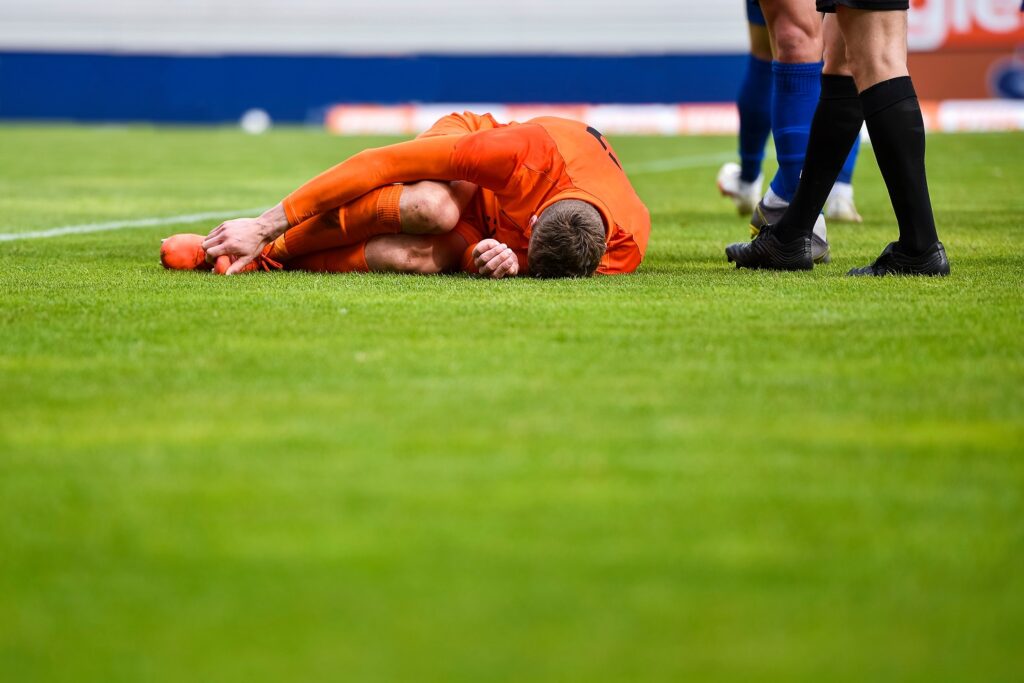
Complete Guide to Diagnosis, Treatment and Recovery of a Syndesmotic Injury
A syndesmotic injury, also known as a syndesmosis injury or high ankle sprain, is damage to the strong ligaments that connect the two lower-leg bones, the tibia (larger of the two bones) and the fibula (thinner bone) just above the ankle. These ligaments keep the ankle mortise stable, especially during weight-bearing and twisting, so an injury can lead to pain, difficulty walking, and, if left untreated, long-term instability.
What is a Syndesmotic Injury?
A syndesmotic injury is a sprain (stretch or tear) of one or more of the distal tibiofibular ligaments: the anterior inferior tibiofibular ligament (AITFL), interosseous ligament/membrane (IOL), posterior inferior tibiofibular ligament (PITFL) and the transverse ligament. These structures act like a belt holding the tibia and fibula together above the ankle joint. Injuries usually happen with forceful external rotation (twisting outwards) of the foot, often while the ankle is dorsiflexed (toes up).
Common causes
- Being tackled or blocked with the foot planted (e.g., rugby, football)
- Sudden twist on uneven ground or artificial turf
- High-energy ankle fractures (may also injure the syndesmosis)
What is the Syndesmosis Joint?
The syndesmosis is the fibrous joint between the lower ends of the tibia and fibula. It is not a typical “joint” with cartilage; instead, a complex of ligaments and the interosseous membrane binds the bones together, allowing a tiny amount of motion but providing significant stability for the ankle mortise. When intact, it keeps the talus snugly seated; when disrupted, the ankle can widen and become unstable. Radiographic measures such as the tibiofibular clear space and overlap help assess stability.
What are the Types of Syndesmotic Injuries?
Clinicians commonly grade injuries by stability, using systems such as the (Modified) West Point classification:
- Grade I (stable): Sprain of the AITFL without diastasis; normal X-ray measures. Managed non-operatively.
- Grade II (variable): Partial instability—may be subdivided into IIa (stable) and IIb (unstable) based on stress testing or imaging; treatment ranges from boot/brace to surgery.
- Grade III (unstable): Complete disruption (AITFL, IOL, often PITFL) with diastasis; surgical stabilisation required. OrthobulletsBioscientifica EOR
MRI-based grading can also describe ligament fibre integrity and associated oedema, while arthroscopy is sometimes used to confirm instability in borderline cases.
How Common are Syndesmotic Injuries?
Syndesmotic sprains account for roughly 1–11% of all ankle sprains in the general population, but the proportion is higher in collision and field sports. Among football/soccer/rugby and similar codes, studies report that up to ~10–20% of ankle ligament injuries involve syndesmosis, and exposure-based rates around 0.38 per 1,000 athlete exposures have been reported in football cohorts.
These injuries typically result in longer time lost than standard lateral ankle sprains.
Symptoms and Causes
What Causes Syndesmotic Injuries?
Syndesmotic injuries most often occur when the foot is planted on the ground and a twisting or outward rotation force is applied to the ankle. This places stress on the ligaments that hold the tibia and fibula together.
- External rotation force – for example, when the foot is turned outwards while the leg continues forward.
- Dorsiflexion force – when the ankle is forced upwards (toes towards the shin), stretching the syndesmosis.
- High-energy trauma – such as skiing falls, rugby tackles, or collisions in football can also damage the syndesmotic ligaments.
These mechanisms differ from a typical “rolled ankle,” which usually injures the lateral ligaments on the outside of the ankle.
What are Syndesmotic Injury Risk Factors?
Certain factors make people more likely to sustain a syndesmotic injury:
- Sports participation – athletes in rugby, football, soccer, skiing, and basketball are at higher risk due to twisting and contact forces.
- Playing surfaces – artificial turf or uneven ground can increase rotational stresses on the ankle.
- Previous ankle injuries – weakened ligaments or altered movement patterns from past sprains can predispose the ankle to another injury.
- Foot and leg alignment – anatomical variations, such as high arches or tight calves, may alter the load on the syndesmosis.
What are the Signs and Symptoms of Syndesmotic Injuries?
Syndesmotic sprains present differently from common ankle sprains. Signs and symptoms may include:
- Pain above the ankle joint that can radiate up the leg.
- Swelling and tenderness across the front or outside of the ankle (less obvious than with lateral sprains).
- Difficulty weight-bearing – walking, pivoting, or pushing off the toes is often painful.
- Feeling of instability – some patients describe the ankle as “giving way.”
- Reduced function – trouble with running, cutting, or changing direction, particularly in sport.
What are the Complications of Syndesmotic Injuries?
If a syndesmotic injury is not properly diagnosed and managed, it can lead to longer-term issues:
- Chronic ankle instability – ongoing looseness of the joint, leading to repeat sprains.
- Persistent pain – especially with twisting or weight-bearing activities.
- Arthritis – abnormal motion at the ankle joint can accelerate wear and cause early osteoarthritis.
- Heterotopic ossification or synostosis – abnormal bone growth between the tibia and fibula, reducing ankle mobility.
- Delayed return to sport/work – syndesmotic injuries often have extended recovery times compared to regular ankle sprains, and if not treated properly, recovery can be further delayed.
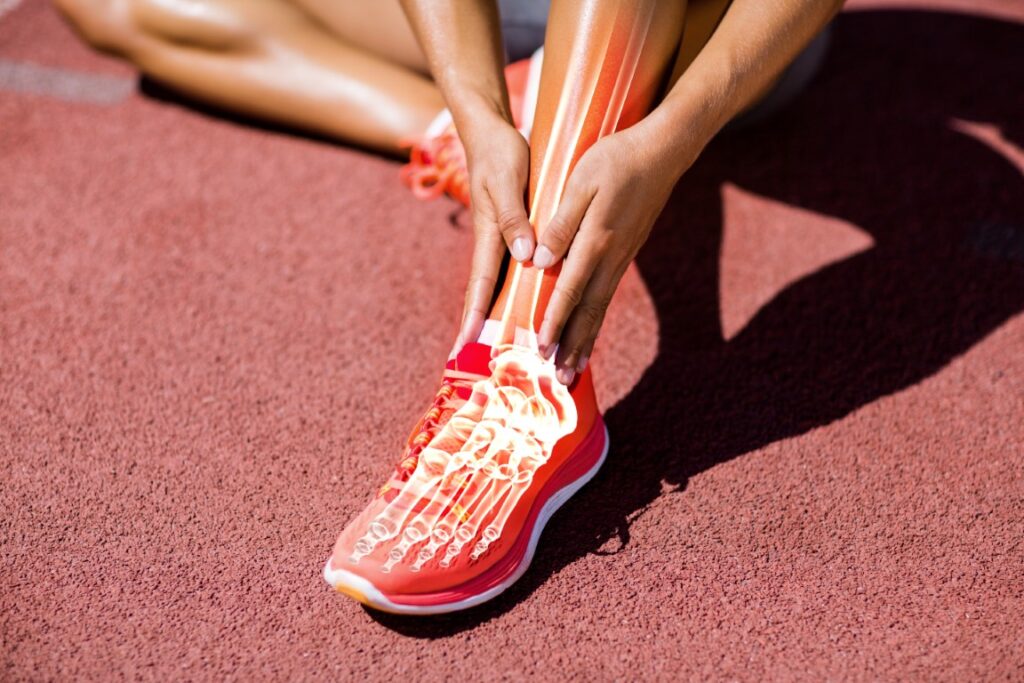
Diagnosis and Tests
How are Syndesmotic Injuries Diagnosed?
Syndesmotic injuries are diagnosed using a combination of history taking, physical examination, and imaging. A provider will begin by asking how the injury occurred, focusing on twisting or forceful dorsiflexion mechanisms. Clinical examination tests are then performed to identify ligament tenderness, pain with stress, and functional limitations. Because syndesmotic injuries can be subtle and easily missed, imaging is often needed to confirm the diagnosis and assess stability. It is important to see a medical professional specialising in orthopaedics if you are concerned about a syndesmotic injury, as they require expert care. Access Ortho offers orthopaedic care for injuries, including sprains, strains and fractures.
Which Tests do Providers Use to Diagnose Syndesmotic Injuries?
Diagnosis usually involves two key steps:
- Clinical tests – checking for tenderness, instability, and pain during specific manoeuvres.
- Imaging studies – looking for widening of the joint space or direct ligament injury.
Together, these help determine whether the injury is stable (can be treated without surgery) or unstable (requires fixation).
Syndesmotic Injury Clinical Tests
Several physical examination manoeuvres are commonly used:
- Squeeze Test – the tibia and fibula are squeezed together at the mid-calf. Pain felt at the ankle joint suggests a syndesmotic injury.
- External Rotation Stress Test – with the knee bent and ankle dorsiflexed, the foot is rotated outwards. Pain at the front of the ankle is considered positive.
- Cross-leg Test – the injured leg is crossed over the opposite knee, putting pressure on the syndesmosis and reproducing pain.
- Palpation – tenderness over the anterior inferior tibiofibular ligament (AITFL) and interosseous membrane supports the diagnosis.
These tests are helpful but not perfect on their own; they are interpreted alongside history and imaging.
Syndesmotic Injury Imaging
- X-rays—Standard weight-bearing ankle X-rays (AP, mortise, lateral) are the first step. They assess the tibiofibular clear space and overlap to look for widening. Stress X-rays may show dynamic instability.
- MRI – the most sensitive tool for detecting ligament damage, bone bruising, and associated injuries (e.g., deltoid ligament tears).
- CT scans – used when subtle widening or malalignment is suspected, particularly for surgical planning. Weight-bearing CT can highlight diastasis that is not visible on plain films.
- Ultrasound – less commonly used, but can show ligament disruption in experienced hands.
Specific Considerations
Syndesmotic Injuries in Athletes
Athletes often present with a clear mechanism, such as a tackle or pivot on turf. Because recovery is typically longer than with lateral ankle sprains, early diagnosis is essential. Sports-specific rehab focuses on balance, agility, and cutting drills. Return-to-play protocols are criteria-based: athletes must demonstrate pain-free running, symmetric strength, and stability before resuming competition.
Chronic Syndesmotic Instability
If not diagnosed early or treated properly, some patients develop persistent pain and instability. Chronic syndesmotic instability can cause difficulty with push-off, running, and pivoting. Management may involve corrective surgery (e.g., ligament reconstruction or screw/suture-button fixation) and structured rehabilitation. Long-term risks include ankle arthritis. Access Ortho specialises in the care of orthopaedic injuries and offers rapid appointments, helping to ensure an early diagnosis.
Syndesmotic Injuries vs High Ankle Sprains
The terms syndesmotic injury and high ankle sprain are often used interchangeably. Both refer to injuries of the ligament complex that connects the tibia and fibula above the ankle joint. This is distinct from a lateral ankle sprain, which involves the ligaments on the outside (lateral side) of the ankle (anterior talofibular ligament, calcaneofibular ligament). High ankle sprains are less common but usually more severe and slower to heal.
Syndesmotic Injuries in Children and Adolescents
In younger patients, the growth plate (physis) can be weaker than the surrounding ligaments. As a result, what looks like a syndesmotic injury in adults may instead involve a physeal injury in children. This requires careful assessment and imaging. Prompt diagnosis is important to avoid growth disturbances or long-term instability.
Access Ortho is a private fracture clinic in Brisbane and Ipswich offering specialist orthopaedic care for musculoskeletal injuries.
Management and Treatment
How are Syndesmotic Injuries Treated?
Treatment depends on how bad the injury is and the joint’s stability. Stable injuries (where the tibia and fibula remain aligned) are managed conservatively, while unstable injuries (where the joint widens under stress) usually require surgery. The decision is based on examination, imaging findings, and patient needs such as activity level and sport participation.
Non-Surgical Treatment for Syndesmotic Injuries
For stable, lower-grade injuries:
- Immobilisation – often in a walking boot or brace for 2–6 weeks, with or without crutches.
- Protected weight-bearing – progressing from partial to full as symptoms improve.
- Physiotherapy – early gentle movement, followed by progressive strength, balance, and proprioception exercises.
- Return to activity – once pain-free, stable, and able to walk, jog, and hop without symptoms.
Non-surgical treatment works best for Grade I and some Grade IIa injuries.

Surgical Treatment for Syndesmotic Injuries
Unstable injuries (Grade IIb and Grade III) or those associated with fractures often require surgery. Common methods include:
- Syndesmotic screw fixation – a rigid metal screw holds the tibia and fibula together while healing occurs. These may be removed later.
- Suture-button (“Tightrope”) systems – flexible devices that allow some natural movement while keeping the joint aligned. These often reduce the need for later hardware removal.
- Combination fixation – screws and suture-buttons may be used together in complex injuries.
Surgery restores stability to allow ligaments to heal and prevents long-term complications such as arthritis.
If you require surgery, the Access Ortho team will help arrange a referral to ensure it is done in a timely manner.
Syndesmotic Injury Rehabilitation
Rehabilitation is a crucial part of recovery:
- Early phase (0–2 weeks) – swelling control, pain management, gentle movement in a protected range.
- Strength and mobility (2–6 weeks) – calf and peroneal strengthening, balance training, and gradual loading.
- Functional rehab (6–12 weeks) – running, jumping, cutting, and sport-specific drills once pain-free and stable.
- Return to sport/work (12+ weeks) – only when strength, balance, and function match the uninjured side.
The orthopaedic team at Access Ortho will work with your physiotherapist to guide progression, ensuring exercises are safe and tailored to individual goals.
Recovery Timeline for Syndesmotic Injuries
- Mild, stable injuries – recovery can take 6–8 weeks.
- Moderate injuries – often 8–12 weeks before full activity.
- Surgical repairs – usually require 3–6 months before unrestricted sport.
Syndesmotic injuries typically take longer to heal than standard ankle sprains, which makes early diagnosis and appropriate management essential.
Prevention
How can I Prevent Syndesmotic Injuries?
While not all injuries can be avoided, risk can be reduced through:
- Ankle strengthening and stability training – improving calf, peroneal, and core strength.
- Balance and proprioception exercises – wobble board or single-leg drills to improve ankle control.
- Supportive footwear and bracing/taping – especially in contact or pivoting sports.
- Progressive return-to-play – avoiding sudden spikes in training load.
Ankle Strengthening for Syndesmotic Injury Prevention
Specific exercises that help protect the ankle include:
- Calf raises (single and double leg)
- Resistance band eversion/inversion (strengthening peroneals and tibialis muscles)
- Balance drills (single-leg stance, wobble board)
- Dynamic control (hopping, cutting, agility ladder drills)
Regular conditioning and sport-specific training reduce the risk of both initial and repeat syndesmotic injuries.
Outlook / Prognosis
What can I expect if I have a Syndesmotic Injury?
Most people recover well from a syndesmotic injury, but recovery is usually slower than that from a standard ankle sprain. With accurate diagnosis, appropriate treatment, and structured rehabilitation, patients can expect a return to normal walking and daily activities, followed by a progressive return to sport or work. The prognosis depends on how severe the injury is and how quickly it is identified.
What is the Recovery Time from a Syndesmotic Injury?
Recovery varies depending on the grade of injury:
- Mild (Grade I) – usually 6–8 weeks to resume normal activity.
- Moderate (Grade II) – often 8–12 weeks, particularly if stability is borderline.
- Severe (Grade III / surgical) – typically 3–6 months before returning to full sport or heavy work.
It is important to follow a criteria-based rehab program rather than relying solely on time. Athletes should only return once their strength, stability, and function are equal to those of the uninjured side.
Long-term Outlook for Syndesmotic Injuries
With correct management, most patients regain full function and return to sport. However, syndesmotic injuries do carry a higher risk of:
- Chronic ankle pain and instability are problematic if untreated or under-rehabilitated.
- Delayed return to play – athletes often take longer to return than with lateral ankle sprains.
- Arthritis – joint degeneration can occur if the syndesmosis heals in a widened or unstable position.
Early and accurate treatment significantly reduces these risks and improves long-term outcomes.
When should I see an Orthopaedic Specialist for a Syndesmotic Injury?
You should see a specialist if you have:
- Pain above the ankle after a twist, tackle, or fall that does not settle in a few days
- Difficulty walking, pushing off, or pivoting on the ankle
- Ankle injuries sustained during sport that cause ongoing pain or swelling
- Suspected instability or an ankle sprain not improving with rest
At Access Ortho fracture clinics, we provide:
- Urgent assessment and diagnosis of ankle injuries, with access to rapid imaging
- Expert management from orthopaedic surgeons and nurse practitioners who specialise in ankle and sports injuries
- Personalised treatment plans – from protective boots and physiotherapy referrals to surgical referrals when required
- Streamlined follow-up so you can safely return to work, sport, and everyday life
Our urgent care model means you avoid delays in emergency departments and receive the right care when you need it most.

When to Seek Immediate Medical Attention
Syndesmotic Injury Red Flags
While many ankle injuries can be treated with rest and early care, certain warning signs mean you should seek urgent assessment:
- Inability to bear weight or take more than a few steps after the injury
- Severe pain above the ankle that does not improve with rest or simple measures
- Visible deformity, significant swelling, or bruising spreading up the leg
- Numbness, tingling, or coldness in the foot (may suggest compromised circulation or nerve involvement)
- Ongoing pain after a “rolled ankle” that is not improving within a few days
If any of these red flags are present, a specialist should review them quickly to rule out a syndesmotic injury or fracture.
What is a Fracture Clinic?
A fracture clinic is a specialised medical facility where orthopaedic surgeons and other healthcare professionals skilled in orthopaedics diagnose, treat, and monitor patients with bone, joint, and ligament injuries.
Unlike general practices or emergency departments, fracture clinics focus specifically on acute musculoskeletal injuries, such as fractures, sprains, and dislocations, ensuring patients receive the right treatment without unnecessary delays.
At Access Ortho fracture clinics, we provide:
- Rapid access to imaging (via local radiology partners) for same-day X-rays and scans
- Specialist diagnosis by orthopaedic surgeons and nurse practitioners experienced in ankle injuries
- Tailored treatment plans including boots, braces, or surgical referral if required
- Rehabilitation pathways with physiotherapy and follow-up care to ensure safe recovery
When should I go to a Fracture Clinic for a Syndesmotic Injury?
You should attend a fracture clinic if you:
- Suspect a syndesmotic injury after a twist, tackle, or sporting incident
- Cannot walk or push off your toes without pain
- Have ongoing swelling, tenderness, or pain above the ankle after a sprain
- Need an expert opinion on return-to-play or safe return to work
- Have already tried rest and simple treatment, but symptoms are not improving
By attending Access Ortho, you avoid long waits in emergency departments and can be seen directly by a team focused on orthopaedic urgent care. We aim to get you diagnosed, treated, and on the path to recovery as quickly as possible.
Frequently Asked Questions about Syndesmotic Injuries
How long does a syndesmotic injury take to heal?
Healing depends on the severity. Mild injuries may recover in 6–8 weeks, moderate sprains often take 8–12 weeks, and severe or surgically treated injuries usually require 3–6 months for full recovery.
Can you walk with a syndesmotic injury?
Some people can walk with a mild syndesmotic injury, but it is often painful and difficult. In moderate to severe injuries, weight-bearing may need to be restricted with crutches or a boot until the ligaments heal.
Is a syndesmotic injury worse than a broken ankle?
Not always, but syndesmotic injuries can be just as serious. They generally take longer to heal than most ankle fractures and carry a higher risk of long-term instability or arthritis if not managed correctly.
What happens if a syndesmotic injury goes untreated?
Untreated syndesmotic injuries can lead to chronic pain, instability, and arthritis. The ankle may feel weak or unstable during walking, running, or sport, and recovery can be much harder if the diagnosis is delayed.
How do I know if I have a syndesmotic injury or a regular ankle sprain?
Unlike a “rolled ankle” (lateral sprain), syndesmotic injuries cause pain above the ankle joint, often with difficulty pushing off or pivoting. They also tend to swell less than lateral sprains, making them harder to recognise without a specialist exam or imaging.
Can syndesmotic injuries heal without surgery?
Stable injuries often heal well with immobilisation, gradual weight-bearing, and structured physiotherapy. Surgery is only needed if the syndesmosis is unstable or widened.
When can I return to sport after a syndesmotic injury?
Athletes usually return in:
- 6–8 weeks for mild injuries
- 8–12 weeks for moderate sprains
- 3–6 months after surgical repair
- Return-to-play depends on strength, balance, and sport-specific testing, not just time.
What is the difference between syndesmotic screws and tightrope repair?
- Screws rigidly fix the tibia and fibula together and may need removal once healing occurs.
- Tightrope (suture-button) systems provide strong but flexible fixation, often allowing earlier mobility and reducing the need for hardware removal.
The orthopaedic surgeon will determine the best surgery for your injury.
Why does my syndesmotic injury hurt more at night?
Due to swelling, reduced movement, and inflammation, pain may feel worse at night. Elevating the ankle, applying gentle compression, and following prescribed pain relief can help.
Can syndesmotic injuries cause arthritis?
Yes. If the syndesmosis heals in a widened or unstable position, it can alter joint mechanics and lead to early ankle arthritis. Prompt, accurate treatment lowers this risk.
How can I speed up recovery from a syndesmotic injury?
- Follow your rehabilitation plan closely.
- Maintain good nutrition, hydration, and sleep.
- Use physiotherapy to restore mobility and strength safely.
- Avoid rushing back to sport before stability is restored.
- At Access Ortho, our orthopaedic team provides evidence-based rehab pathways to help patients recover faster and reduce re-injury risk.
What shoes should I wear with a syndesmotic injury?
Supportive shoes with good ankle stability and a firm sole are best during recovery. High-top trainers or walking boots may help protect the ankle, especially in early phases. A moon boot may be necessary in the acute healing phase.
Is physiotherapy necessary for syndesmotic injuries?
Yes. Physiotherapy is essential to restore strength, balance, and ankle control. Without rehab, you risk persistent pain or re-injury. At Access Ortho, we can refer to physiotherapists with expertise in ankle and sports rehabilitation.
Can syndesmotic injuries recur?
Yes, especially if rehab is incomplete or return-to-sport is rushed. Strengthening, balance training, and sport-specific drills reduce the risk of recurrence.
What is the success rate of syndesmotic injury surgery?
Modern surgical techniques, including suture-button fixation, have high success rates. Most patients return to their previous level of activity, and complications are uncommon when timely treatment and rehabilitation are followed.